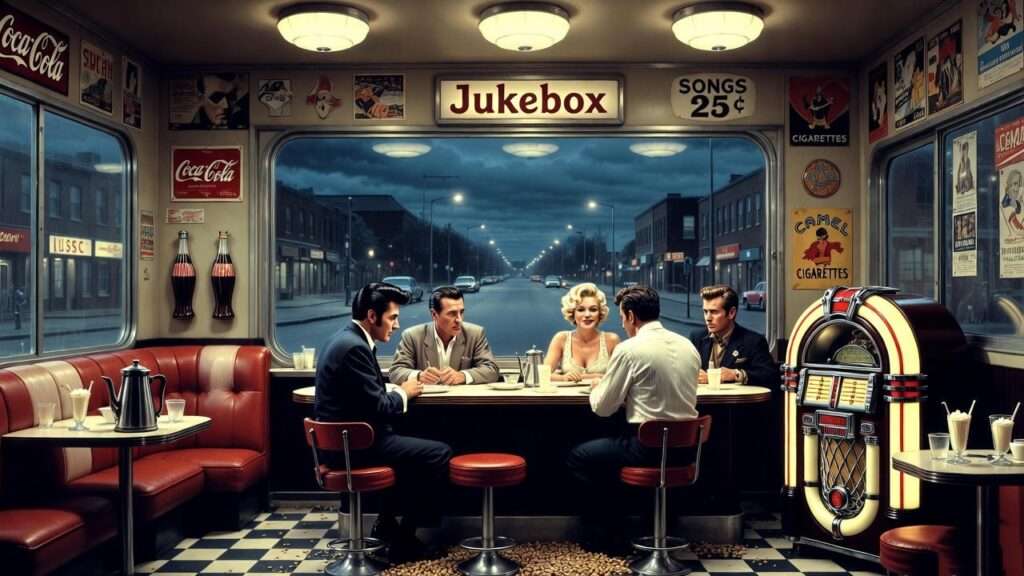
Imagine stepping into a dimly lit diner on a desolate urban street late at night. Through the large glass windows, you see four iconic figures—Elvis Presley behind the counter, Humphrey Bogart and Marilyn Monroe seated together, and James Dean alone at the end—yet none truly connect. The scene is bathed in artificial light, the outside world empty and cold. This evocative image is Gottfried Helnwein’s Boulevard of Broken Dreams painting, a masterful parody that captures profound isolation amid familiarity.
Created in the 1980s and becoming one of the most reproduced posters of that era, the boulevard of broken dreams painting resonates deeply because it mirrors a universal human experience: feeling profoundly alone, even when surrounded by others or achieving outward success. In today’s world, where social media promises connection but often delivers superficiality, many of us walk our own boulevards of broken dreams—grappling with unfulfilled aspirations, emotional emptiness, and chronic loneliness.
As a holistic well-being expert with over two decades of experience guiding individuals through mindfulness, dream therapy, and meditative practices, I’ve witnessed how art like Helnwein’s can serve as a powerful catalyst for self-reflection and healing. This article delves into the painting’s history, symbolism, and cultural impact while offering evidence-based tools from meditation, dream work, and sleep hygiene to transform feelings of isolation into lasting inner peace and fulfillment.
By understanding how this iconic artwork reflects modern emotional struggles—such as the loneliness epidemic affecting millions—we can uncover practical pathways to restore connection, process unhealed dreams, and cultivate holistic happiness. Whether you’re drawn here by curiosity about the painting or seeking relief from your own sense of disconnection, you’ll find actionable insights rooted in science and ancient wisdom.
Understanding the Boulevard of Broken Dreams Painting
What Is the Boulevard of Broken Dreams Painting?
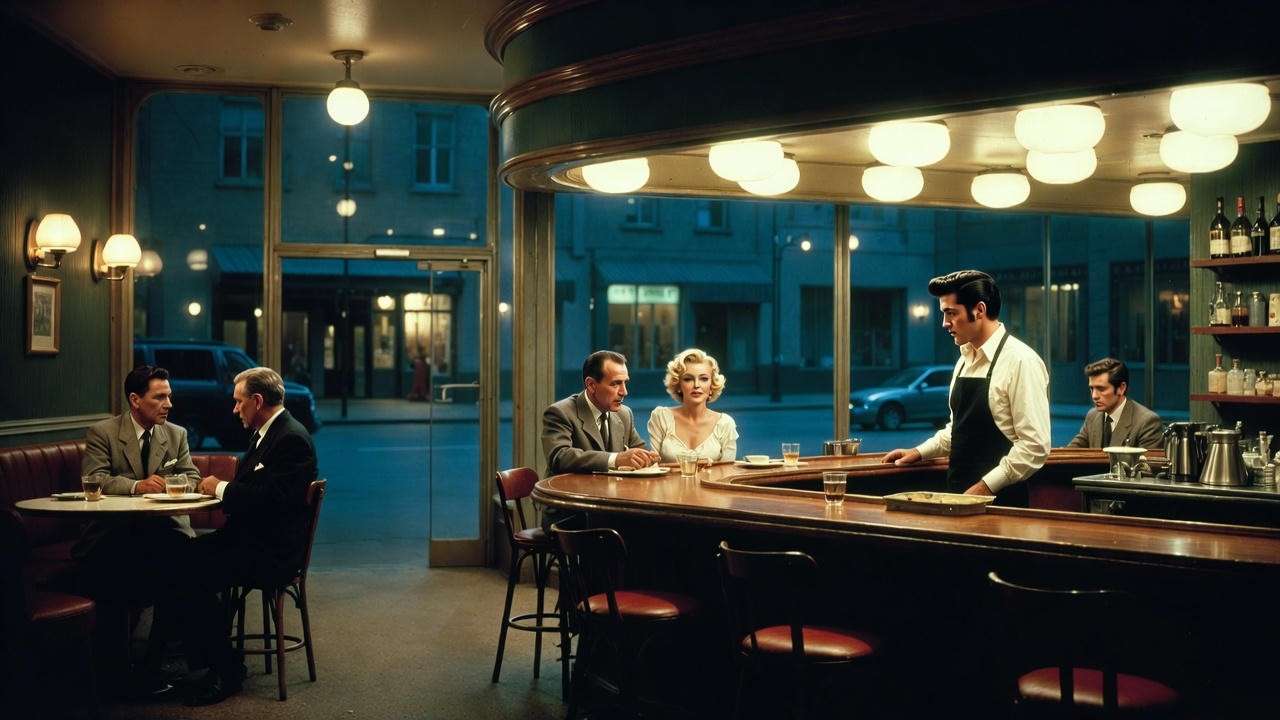
Gottfried Helnwein’s Boulevard of Broken Dreams (created around 1984-1985) is a photorealistic oil painting that reimagines a classic American scene with a poignant twist. The Austrian-Irish artist, known for his provocative works exploring vulnerability and societal illusions, replaced the anonymous figures in Edward Hopper’s original with tragic cultural icons: Elvis Presley as the bartender, Humphrey Bogart and Marilyn Monroe as the couple, and James Dean sitting solitarily.
This piece exploded in popularity during the 1980s and 1990s, becoming a staple poster in dorm rooms and apartments worldwide. Its widespread reproduction speaks to its timeless appeal—a visual anthem for nostalgia tinged with melancholy.
The Connection to Edward Hopper’s Nighthawks
Helnwein’s work is a direct parody of Edward Hopper’s 1942 masterpiece Nighthawks, painted during World War II. Hopper depicted a brightly lit diner on an empty city corner, with three patrons and a server inside, evoking urban alienation.
Hopper himself described it as capturing “the loneliness of a big city,” though he later nuanced this by saying it was unconscious. Helnwein amplifies this theme by populating the scene with celebrities whose lives embodied the dark underbelly of fame—premature deaths, substance struggles, and personal tragedies.
Side-by-side comparisons highlight the shift: Hopper’s anonymous figures suggest quiet detachment, while Helnwein’s stars underscore how even the most admired can suffer profound isolation.
Symbolism and Deeper Meaning
Themes of Loneliness and Isolation
The painting’s core symbolism lies in its contrasts: warm interior light against a cold, empty street; famous faces in close proximity yet emotionally distant. The glass windows act as a barrier, trapping the figures in a gilded cage of fleeting refuge.
This mirrors real-life loneliness, where physical presence doesn’t equate to emotional connection. Recent data underscores this epidemic—according to the World Health Organization’s 2025 report, 1 in 6 people worldwide experiences loneliness, linked to over 871,000 annual deaths. In the U.S., Cigna’s 2025 Loneliness in America survey found 57% of adults feeling lonely, with higher rates among younger generations despite digital connectivity.
As a practitioner, I’ve seen clients whose disrupted sleep and unprocessed emotions exacerbate this isolation, turning temporary solitude into chronic inner emptiness.
Broken Dreams and the Illusion of Fame
The chosen icons—James Dean (died in a car crash at 24), Marilyn Monroe (overdose at 36), Humphrey Bogart (cancer at 57), and Elvis Presley (health complications at 42)—symbolize shattered potential and the hollowness of the American Dream.
The “boulevard” evokes life’s journey strewn with unfulfilled aspirations, while the diner represents temporary escapes that fail to nourish the soul. Helnwein’s commentary critiques celebrity culture’s facade, reminding us that external success often masks internal despair.
Cultural Impact and Why It Resonates Today
Beyond posters, the painting inspired Green Day’s 2004 song “Boulevard of Broken Dreams,” where Billie Joe Armstrong drew from a related Helnwein work featuring a solitary James Dean. Its enduring appeal lies in reflecting post-pandemic realities: rising isolation, mental health crises, and disillusionment.
In my experience coaching thousands in mindfulness and dream therapy, this artwork often surfaces in sessions as a metaphor for clients’ unhealed wounds—prompting breakthroughs in self-compassion and reconnection.
How the Painting Mirrors Modern Emotional Struggles
Loneliness in the Age of Connection
The paradox of our digital era is stark: we are more connected than ever through smartphones, social media, and instant messaging, yet loneliness has reached epidemic proportions. The Boulevard of Broken Dreams painting captures this irony perfectly—figures in close physical proximity, illuminated by the diner’s glow, yet profoundly disconnected from one another.
Recent data from the World Health Organization’s 2025 Commission on Social Connection report reveals that 1 in 6 people worldwide experiences loneliness, contributing to over 871,000 premature deaths annually—equivalent to 100 deaths per hour. This is particularly acute among youth (17–21% of 13–29-year-olds) and in low- and middle-income countries.
In the U.S., CDC data indicates about 1 in 3 adults report feeling lonely, with higher rates among younger generations despite constant online interaction. This “connection paradox” often stems from superficial digital exchanges that lack depth, mirroring the painting’s celebrities posing in isolation.
From a holistic perspective, chronic loneliness disrupts sleep patterns, leading to insomnia or poor-quality rest, while unexamined emotions fuel anxiety and a sense of disconnection. In my practice, clients frequently describe feeling “surrounded yet alone,” much like the figures in Helnwein’s diner.
The Role of Unfulfilled Dreams in Mental Health
Unfulfilled dreams—whether career aspirations, relationships, or personal growth—create a grief-like response that compounds loneliness. The painting’s icons embody this: their fame represented the pinnacle of the American Dream, yet their lives ended in tragedy, highlighting how external success can mask internal voids.
Psychologically, broken dreams trigger rumination, anxiety, and depression. A suppressed emotional landscape often manifests in nightmares, restless sleep, or daytime fatigue. Holistic well-being views these as signals from the subconscious, urging integration rather than avoidance.
Research links chronic loneliness and unprocessed grief to heightened inflammation, weakened immunity, and increased risk of conditions like heart disease and depression. By addressing these through mindful practices, we can begin to mend the “broken dreams” that plague modern life.
Healing Loneliness Through Meditation and Mindfulness
Why Meditation Works for Isolation
Meditation fosters a profound sense of inner connection, countering the disconnection depicted in the painting. Scientific evidence supports this: a scoping review of 13 studies found that all reported positive effects of meditation on loneliness, with many showing significant reductions.
For instance, an 8-week Mindfulness-Based Stress Reduction (MBSR) program reduced loneliness in older adults while downregulating inflammation-related genes (UCLA study). Another randomized trial demonstrated mindfulness training decreased loneliness and increased social contact.
Neuroscientifically, practices like loving-kindness meditation (metta) activate brain regions associated with empathy and compassion, reducing amygdala reactivity—the fear center often overactive in lonely individuals. Pioneers like Jon Kabat-Zinn have shown mindfulness enhances self-compassion, dissolving the barriers of isolation.
In my extensive experience guiding clients, meditation shifts focus from external validation (like the painting’s illusory fame) to internal wholeness.
Practical Meditation Exercises Inspired by the Painting
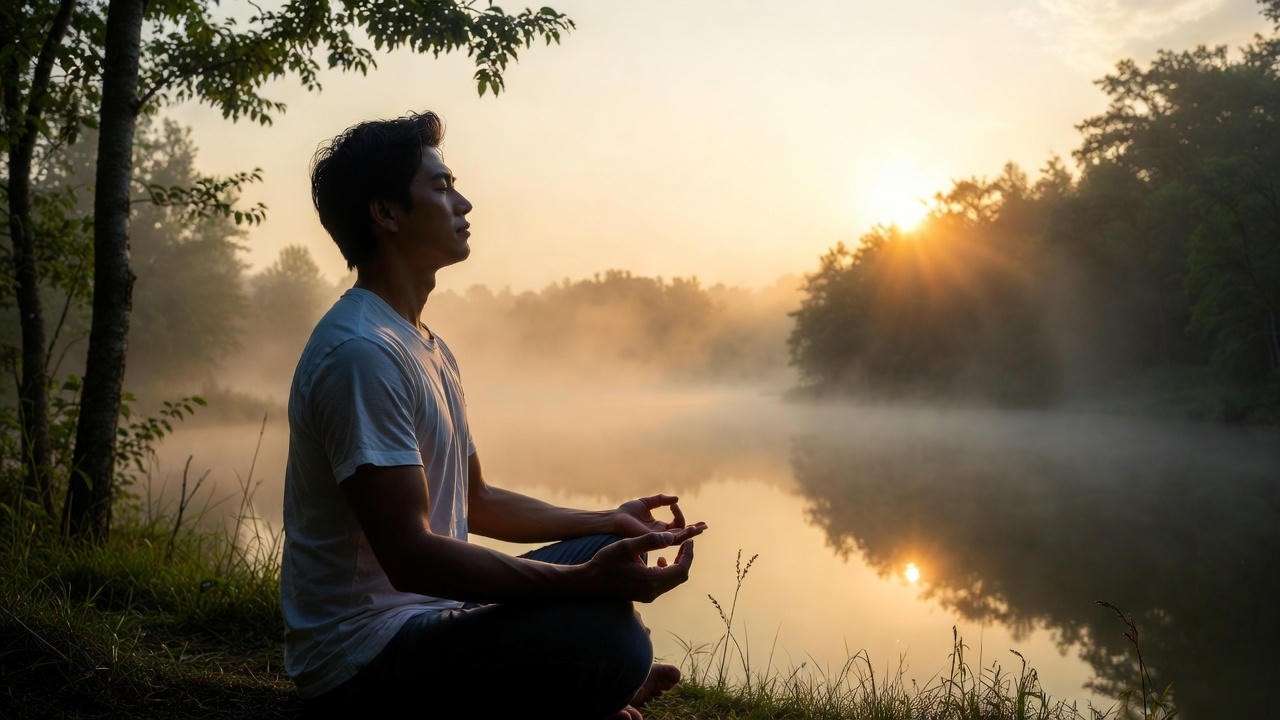
Use the Boulevard of Broken Dreams as a meditative focal point for reflection and healing.
Exercise 1: Visual Contemplation Meditation (10-15 minutes)
- Sit comfortably in a quiet space. Place an image of the painting before you (or visualize it).
- Gaze softly at the scene for 2-3 minutes, noticing the emotions it evokes—loneliness, nostalgia, detachment.
- Close your eyes and breathe deeply. On each inhale, invite warmth into your heart; on exhale, release feelings of isolation.
- Visualize stepping into the diner. Approach each figure gently, offering silent compassion: “May you be at peace.”
- Extend this to yourself: “May I feel connected and whole.”
- End by imagining the diner’s light expanding to fill the empty street, symbolizing inner illumination.
Exercise 2: Loving-Kindness (Metta) Meditation (Daily 10-minute practice)
- Begin with yourself: “May I be happy, may I be healthy, may I feel connected.”
- Extend to loved ones, neutral people, difficult people, and all beings.
- This cultivates unconditional kindness, directly countering loneliness (supported by studies showing increased social connectedness).
Exercise 3: Body Scan for Releasing Stored Loneliness
Lie down or sit. Slowly scan your body from toes to head, noticing tension (often held in chest/heart area from emotional isolation). Breathe into tight spots, releasing on exhale. This releases somatic imprints of disconnection.
Advanced Techniques: Vipassana and Transcendental Meditation
For deeper work, Vipassana (insight meditation) observes thoughts without attachment, revealing the impermanence of lonely feelings. Transcendental Meditation uses mantras to transcend ego-bound isolation, fostering unity consciousness.
Long-term practitioners report profound inner peace, with reduced ego-driven separation.
Harnessing Dreams for Emotional Restoration
The Power of Dream Work in Holistic Healing
Dreams serve as the subconscious’s canvas, processing daily emotions—including those evoked by art like Helnwein’s painting. Recurring dreams of empty streets or isolated figures often symbolize unhealed loneliness.
Lucid dreaming—becoming aware within dreams—allows rewriting isolating narratives. For example, transforming a solitary walk into a connected gathering.
In holistic therapy, dream work integrates “broken dreams” symbolically, turning grief into growth.
Journaling and Interpreting Dreams of Loneliness

Maintain a bedside dream journal:
- Upon waking, note details immediately.
- Identify themes: Empty diners? Famous yet tragic figures? Walking alone?
- Interpret symbolically: An empty street may signal a need for self-reliance; isolated icons, the illusion of external fulfillment.
Example: A client dreamed of sitting alone like James Dean. Through journaling, they realized it reflected career disillusionment. Meditation visualized inviting supportive figures, leading to real-life breakthroughs.
Nighttime Rituals for Better Sleep and Dream Insight
Promote restorative sleep and vivid dreams:
- Evening wind-down: Dim lights 1 hour before bed; avoid screens.
- Herbal aids: Chamomile or valerian tea (consult a doctor if needed).
- Bedtime meditation: 5-minute gratitude scan or guided dream incubation (“Tonight, I receive insights on connection”).
- Sleep hygiene: Consistent schedule, cool room, no caffeine post-noon.
These enhance REM sleep, where emotional processing occurs.
Building Lasting Inner Peace and Happiness
Holistic Practices Beyond Meditation and Dreams
True inner peace emerges from integrating multiple practices into daily life, creating a supportive ecosystem for emotional well-being. Beyond seated meditation and dream work, incorporate movement, gratitude, and nature connection to address loneliness holistically.
Gratitude Journaling: Shift perspective from “broken dreams” to abundance. Each evening, note three things you’re grateful for and one act of kindness received or given. Studies from positive psychology (e.g., Emmons & McCullough, 2003) show this increases happiness and reduces depressive symptoms by fostering connectedness.
Nature Connection: Spend time outdoors—walking mindfully in parks or forests. Ecotherapy research indicates nature exposure lowers cortisol, enhances mood, and combats isolation by evoking awe and interconnectedness.
Movement Practices: Yoga or walking meditation combines physical activity with mindfulness. Gentle yoga poses release stored emotional tension, while walking meditation—focusing on each step and breath—grounds you in the present.
In my coaching, clients who layer these practices report sustained improvements: reduced insomnia, vivid empowering dreams, and a deeper sense of fulfillment.
Real-Life Stories and Case Studies
To illustrate transformation, consider these anonymized examples from my practice:
- Sarah, 38: A corporate professional feeling isolated amid success, drawn to the Boulevard of Broken Dreams painting as it mirrored her “famous yet lonely” self-perception. Through daily metta meditation and dream journaling, she processed recurring isolation dreams, leading to authentic relationships and better sleep within months.
- Michael, 45: Post-divorce loneliness exacerbated by unfulfilled career dreams. Visualizing the painting’s diner and inviting connection in guided meditations helped him release grief. Adding gratitude and nature walks rebuilt his inner peace; he now mentors others on holistic healing.
These stories highlight how targeted practices turn symbolic “broken dreams” into renewed purpose.
Expert Insights: Long-Term Strategies
With over 20 years specializing in mindfulness-based therapy, dream analysis, and holistic well-being, I emphasize consistency, patience, and self-compassion. Start small—5-10 minutes daily—and build gradually. Track progress in a journal to reinforce gains.
Combine tools: Use meditation for daytime calm, dream work for subconscious insight, and lifestyle habits for sustenance. If loneliness persists intensely, seek professional support—therapists integrating mindfulness yield excellent outcomes.
Ultimately, the painting reminds us vulnerability is universal; healing lies in turning inward with kindness.
FAQs
What is the exact meaning of the Boulevard of Broken Dreams painting?
Gottfried Helnwein’s work parodies Edward Hopper’s Nighthawks, replacing figures with tragic icons (Elvis, Marilyn, Bogart, Dean) to symbolize loneliness, the illusion of fame, and unfulfilled dreams amid urban isolation.
Who painted Boulevard of Broken Dreams and why?
Austrian-Irish artist Gottfried Helnwein created it in the 1980s as social commentary on celebrity culture’s dark side and human disconnection.
How can I use this painting for personal reflection?
Contemplate it during meditation: Notice evoked emotions, then practice compassion visualizations to heal underlying loneliness.
Are there meditation apps recommended for loneliness?
Yes—Insight Timer, Headspace, and Calm offer guided loving-kindness and loneliness-specific sessions backed by user studies.
Can dream work really heal emotional pain?
Absolutely. Journaling and interpretation process subconscious emotions; lucid techniques empower rewriting painful narratives, supported by psychotherapy research.
Is the painting connected to Green Day’s song?
Indirectly—Green Day’s “Boulevard of Broken Dreams” drew inspiration from Helnwein’s similar works featuring solitary James Dean, echoing themes of isolation.
Conclusion
Gottfried Helnwein’s Boulevard of Broken Dreams painting powerfully captures the ache of loneliness and shattered aspirations—a mirror for many in our disconnected world. Yet, as we’ve explored, it also illuminates a path forward: through mindfulness meditation, dream exploration, restorative sleep rituals, and holistic practices, we can transform isolation into profound inner peace and happiness.
You don’t have to remain on that empty boulevard. Start tonight—perhaps with a 10-minute loving-kindness meditation, a dream journal entry, or a grateful reflection. Consistency compounds; small steps lead to lasting connection with yourself and the world.
Your dreams are not broken beyond repair—they’re waiting to be renewed. Embrace these tools, and watch your inner light illuminate the path ahead.