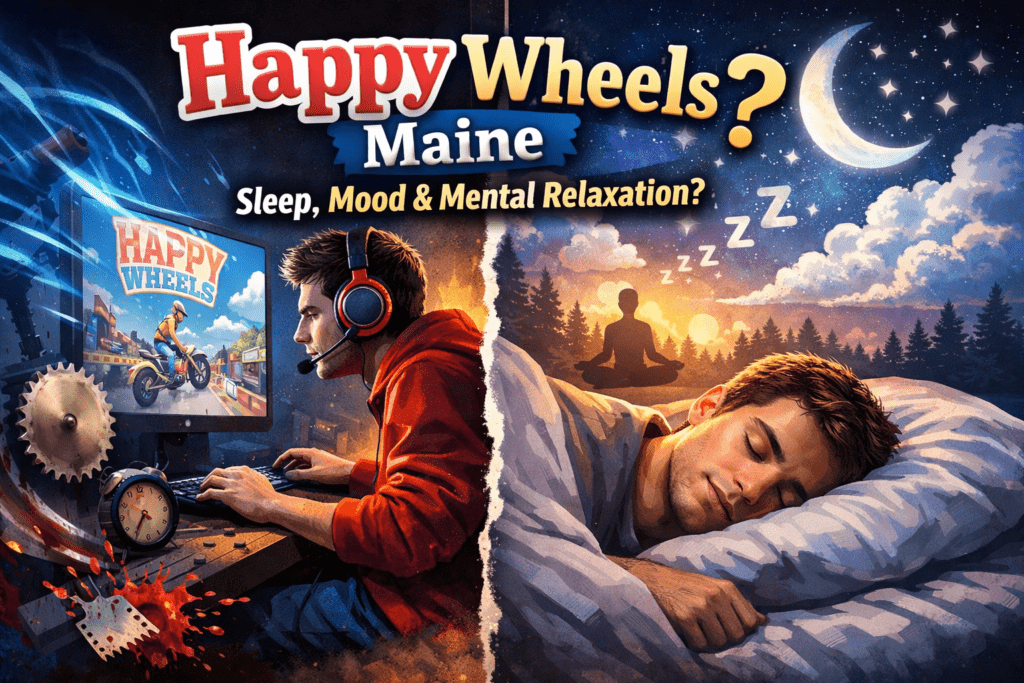
A game can end in seconds, yet its mental effects can linger for hours. That is why many people who search happy wheels maine are often looking for more than simple gameplay access—they may also be noticing something unusual afterward: a restless mind, elevated alertness, or difficulty mentally switching off after play. What feels like harmless entertainment can sometimes create a subtle but measurable impact on sleep quality, mood regulation, and evening relaxation.
Fast-paced browser games trigger the brain differently than passive content. Unlike watching a video, a game demands prediction, reaction, emotional response, and repeated micro-decisions. In a title like Happy Wheels, the brain is constantly anticipating sudden changes, failures, and reward moments. That mental intensity is precisely why some players feel energized, while others notice racing thoughts long after closing the browser.
This article explores what happens neurologically during high-stimulation gameplay, why certain people feel stronger after-effects, and how to enjoy digital entertainment without unintentionally disrupting sleep, mood, or nervous system recovery.
Why Fast-Paced Online Games Feel Hard to Forget After You Stop Playing
The human brain is designed to prioritize unfinished patterns. When a game delivers rapid challenge loops, surprise outcomes, and emotional unpredictability, your mind does not immediately classify the experience as “finished” when you stop playing.
Instead, it often keeps processing.
This explains why a short gaming session can continue replaying mentally later—especially at night, when environmental distractions disappear.
The Hidden Question Most Players Don’t Ask
Most players focus on whether a game is fun, frustrating, or addictive. Few ask a deeper question:
What state does this game leave my nervous system in after I stop?
That question matters because digital stimulation does not stop at the screen. It influences:
- mental speed
- emotional tension
- dopamine rhythm
- attention residue
- pre-sleep thought intensity
Games built around sudden failure and rapid retry cycles create unusually strong cognitive engagement because the brain repeatedly predicts outcomes and immediately corrects errors.
That prediction-repair loop is neurologically demanding.
Why This Matters for Sleep and Emotional Recovery
Sleep begins long before your eyes close.
The brain requires a gradual shift from active alertness into reduced stimulation. If a person plays a highly reactive game late in the evening, the transition into sleep becomes less smooth because the nervous system remains partially activated.
That does not mean gaming is harmful.
It means timing and intensity matter.
Understanding Happy Wheels and Why It Feels So Mentally Intense
What Makes Happy Wheels So Psychologically Engaging
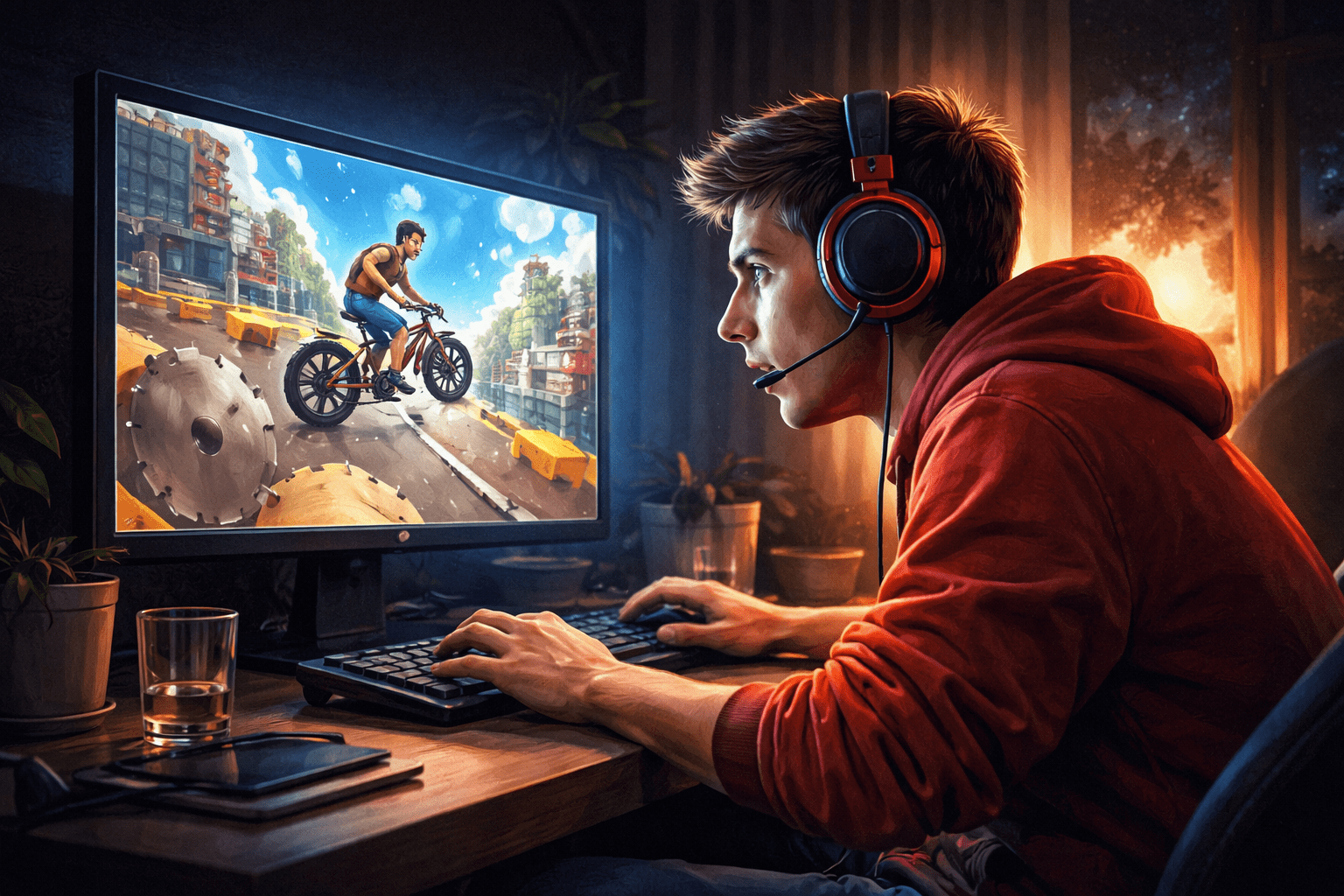
Happy Wheels became memorable because it combines absurd humor with sudden unpredictability.
Several design elements make it unusually stimulating:
- physics-based instability
- unexpected movement outcomes
- high consequence for small mistakes
- visual shock moments
- immediate restart loops
This creates a strong attention lock because the brain never fully relaxes during play.
Why Unpredictable Gameplay Triggers Strong Attention
The brain is especially sensitive to uncertainty.
Predictable tasks require less energy. Unpredictable tasks require continuous monitoring.
In games where each movement may suddenly fail, the brain maintains heightened vigilance. This activates cognitive systems similar to those used during real-world problem solving.
That is why even simple browser games can feel mentally intense.
The Brain’s Reward System During Repeated Challenge Cycles
Every near-success activates reward anticipation.
Even failure can reinforce continued attention because the brain predicts improvement on the next attempt.
This loop stimulates dopamine—not necessarily in extreme amounts, but enough to sustain engagement.
That sustained engagement becomes important later when trying to rest.
Because dopamine does not simply create pleasure.
It creates continued wanting.
And continued wanting delays mental stillness.
The Meaning Behind “Happy Wheels Maine” Search Intent
Why People Search for Happy Wheels Maine
The phrase happy wheels maine appears to reflect a keyword variation linked to browser access, school-related search habits, regional indexing, or platform availability.
In many cases, users searching this phrase are looking for:
- playable browser versions
- safe access points
- unblocked versions
- updated game availability
- location-linked keyword combinations
But behind that technical search intent lies another opportunity: understanding how this style of game interacts with well-being.
Is It About Gameplay Access, Versions, or Online Availability?
Search behavior often includes unusual regional keyword combinations that emerge from user habits rather than official naming.
This means happy wheels maine may not describe a new version of the game—it may simply represent a repeated search phrase users have adopted.
For publishers in wellness niches, this creates a useful bridge:
A gaming-related search can become a deeper discussion about digital stimulation and mental health.
Why Keyword Variations Matter in Gaming Searches
Search engines increasingly evaluate topical relevance rather than exact phrase repetition alone.
That means supporting concepts naturally improve authority:
- browser gaming effects
- evening screen exposure
- dopamine and attention
- gaming before bed
- nervous system stimulation
These related concepts strengthen content quality and search relevance.
Can High-Stimulation Games Affect Sleep Quality?
What Happens in the Brain After Intense Gameplay
When a person plays a highly reactive game, several systems activate at once:
- visual attention networks
- motor prediction circuits
- emotional response centers
- reward anticipation pathways
This creates temporary cognitive elevation.
The important detail:
The brain does not instantly deactivate these systems when gameplay stops.
It tapers down gradually.
Why Your Mind May Stay Active After Gaming
Many people notice this exact pattern:
They stop playing.
But mentally, they continue replaying scenarios.
That happens because unfinished cognitive loops remain active.
The brain keeps reviewing:
- missed actions
- near successes
- surprising failures
- future attempts
This is called attention residue.
Attention residue is one reason falling asleep can feel harder after mentally demanding digital activity.
How Screen Stimulation Delays Natural Sleep Signals
Screens add another layer.
Blue-enriched light from displays influences melatonin timing, a biological hormone involved in sleep readiness.
Melatonin normally rises as evening darkness increases.
Bright screens delay that rise.
So now two factors overlap:
- light exposure
- mental stimulation
Together they can delay natural sleep onset more than either factor alone.
Signs a Game Is Affecting Your Sleep Without You Realizing It
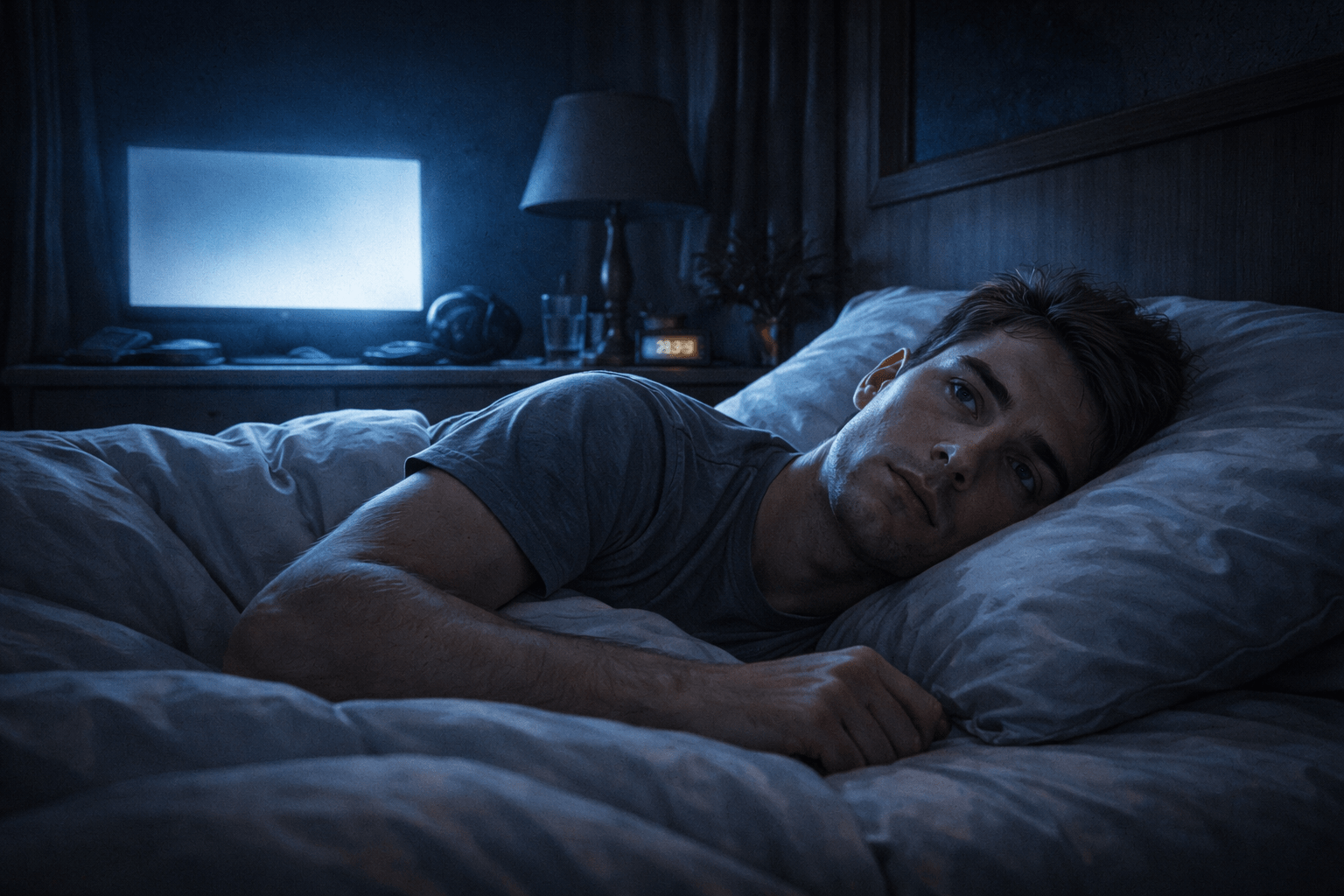
Not every effect feels dramatic.
Often the signs are subtle.
Mental Replay Before Sleep
A common sign:
You lie down and your mind keeps replaying movement sequences or game moments.
This does not mean addiction.
It usually means cognitive activation remains elevated.
Restlessness and Delayed Relaxation
Other signs include:
- needing longer to feel sleepy
- difficulty staying mentally still
- increased body alertness
- checking phone again after stopping
Sleep Feels Lighter After Late Gaming
Some players report:
“I slept, but it didn’t feel deeply restful.”
This can happen when pre-sleep nervous system activation remains elevated.
Sleep begins, but depth may feel reduced.
How Happy Wheels Can Influence Mood and Emotional State
Why Fast Success-Failure Cycles Affect Emotions
Games with repeated rapid failure produce emotional micro-swings.
Within minutes, a player may experience:
- amusement
- irritation
- excitement
- relief
- determination
That emotional cycling is mentally engaging.
But extended cycles can create fatigue.
Micro-Frustration and Mental Fatigue
Micro-frustration is small but repeated emotional effort.
Each failure seems tiny.
Yet dozens of failures accumulate.
The brain processes each one as a mini stress event followed by rapid reset.
That repeated reset costs energy.
Why Some Players Feel Energized While Others Feel Drained
Individual nervous systems differ.
Some people recover quickly from stimulation.
Others carry stimulation longer.
This often depends on:
- baseline anxiety levels
- sleep debt
- stress load
- personality sensitivity
People already mentally overloaded often notice stronger after-effects.
The Nervous System and Digital Overstimulation
Why the Body Stays Alert Even After the Game Ends
Mental stimulation affects the body too.
Even without conscious stress, the nervous system can remain elevated.
This includes:
- faster internal alertness
- reduced physical heaviness
- delayed calm breathing
The Sympathetic Nervous System and Digital Arousal
Sympathetic nervous system governs alertness and readiness.
Fast games can temporarily increase sympathetic activation.
That is useful during play.
But not ideal immediately before sleep.
Why Evening Gaming Feels Different From Daytime Gaming
The same game often feels different at night because nighttime removes competing sensory input.
After the game ends, silence becomes noticeable.
And in silence, residual stimulation becomes obvious.
Healthy Gaming Habits That Protect Sleep and Mental Calm
How to Play Without Disrupting Sleep
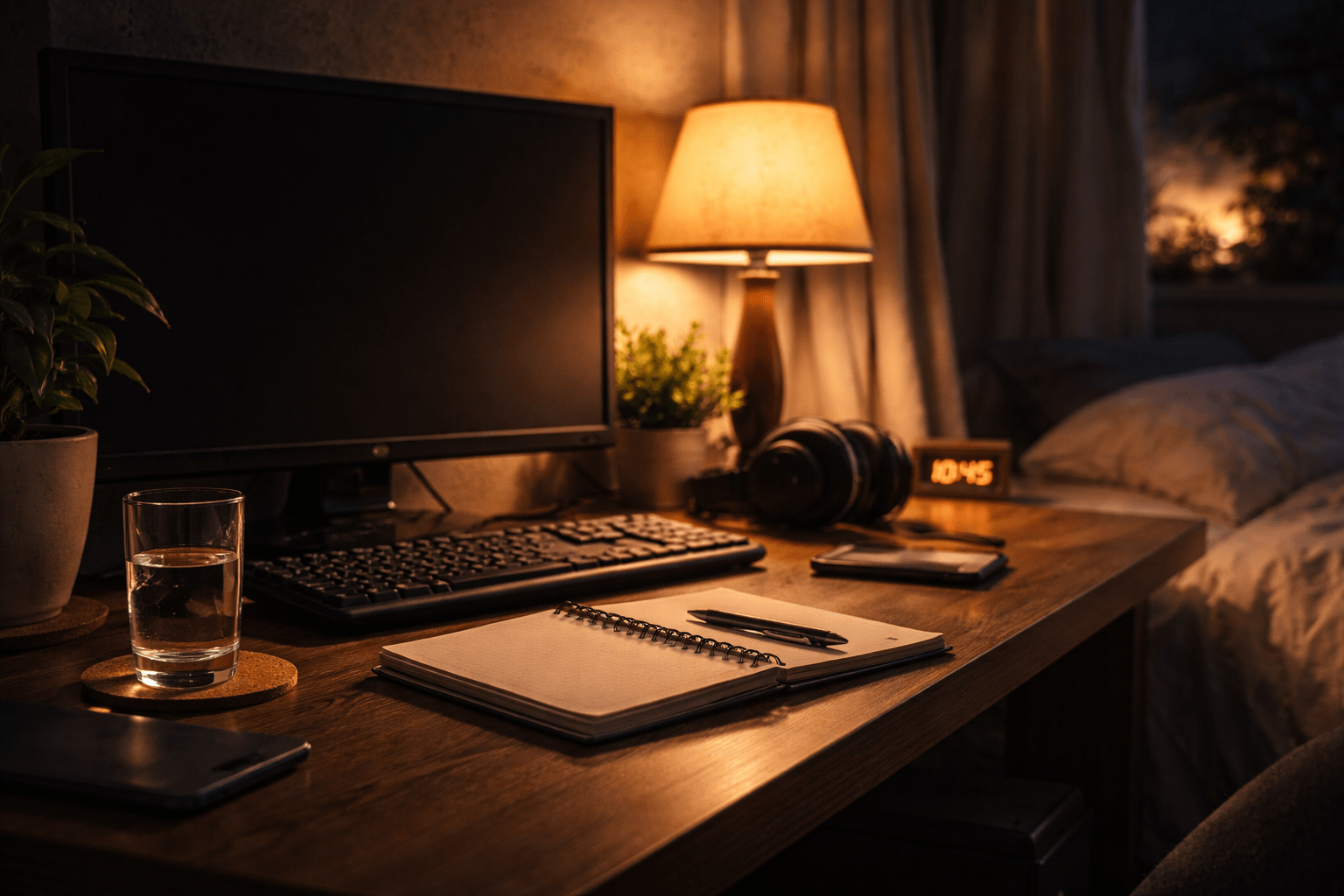
The goal is not avoiding games.
It is reducing unwanted carryover.
The 60-Minute Buffer Before Sleep
A highly effective guideline:
Stop intense gameplay at least one hour before sleep.
This allows brain activation to decline naturally.
Why Timing Matters More Than Duration
A short intense session right before bed may affect sleep more than a longer session earlier in the evening.
Timing often matters more than total minutes.
Simple Reset Techniques After Gaming
The brain transitions best when stimulation drops gradually.
Useful methods:
- lower screen brightness
- avoid switching immediately to social media
- reduce room lighting
- sit quietly for five minutes
Breathing Methods That Help the Brain Shift Gears
Slow breathing directly signals reduced alertness.
A simple method:
- inhale 4 seconds
- hold 4 seconds
- exhale 6 seconds
Repeat for 10 cycles.
This helps the nervous system shift toward recovery.
Can Certain Personality Types Be More Sensitive to Game Stimulation?
Why Some People Feel More Affected Than Others
Sensitivity varies significantly.
People who tend to think deeply often experience stronger carryover.
This includes those prone to:
- overthinking
- emotional intensity
- mental replay
Highly Sensitive Minds and Fast-Paced Games
High sensitivity does not mean weakness.
It often means the brain processes stimulation more deeply.
That can make even simple games mentally memorable.
Competitive Thinking Can Continue Into Sleep
Even non-competitive games trigger self-improvement thinking:
“I almost got that right.”
“I should try one more time.”
That unfinished loop easily extends into bedtime.
Expert Insight: What Sleep Research Suggests About Interactive Games
Modern sleep science increasingly distinguishes between passive screen exposure and interactive digital stimulation.
Interactive games demand more from the brain than passive viewing because the user is not just consuming information—they are actively generating decisions, predictions, and emotional responses every second.
This difference matters because sleep is highly sensitive to cognitive arousal, not just screen brightness.
Not All Games Affect the Brain the Same Way
A calm puzzle game and a high-intensity reaction game create very different neurological states.
Researchers studying pre-sleep digital behavior often separate games into categories such as:
- low arousal
- moderate cognitive load
- high emotional reactivity
- fast motor demand
A game like Happy Wheels falls closer to the high-reactivity side because of:
- sudden unpredictability
- repeated failure-recovery loops
- visual shock elements
- rapid movement anticipation
That does not automatically make it harmful.
It simply means the brain requires more time afterward to return to baseline.
Intensity, Pace, and Emotional Engagement Matter
Three players may spend the same amount of time gaming and experience very different outcomes.
Why?
Because impact depends on:
- how emotionally invested the player becomes
- whether frustration rises during play
- whether the session happens close to bedtime
- whether other stress is already present
Someone already mentally tired may experience stronger disruption from the same game than someone fully rested.
This is why blanket advice like “gaming is bad before sleep” is incomplete.
The more accurate conclusion is:
The more stimulating the game, the more intentional the recovery period should be.
Is Happy Wheels Harmful or Just Misunderstood?
When Gaming Is Fine—and When It Starts Affecting Well-Being
Most casual gaming is harmless when balanced well.
Problems usually appear when stimulation exceeds recovery.
That can happen when:
- gaming replaces winding-down time
- sessions extend late into the night
- emotional frustration remains unresolved
- sleep schedule becomes inconsistent
The issue is rarely the game alone.
The issue is the context around the game.
Healthy Enjoyment vs Habitual Overactivation
Healthy gaming usually looks like:
- intentional play duration
- natural stopping point
- no pressure to continue
- no sleep compromise
Overactivation often looks like:
- “just one more round” repeatedly
- difficulty mentally disengaging
- irritability after stopping
- reduced sleep readiness
The difference is awareness.
Recognizing Personal Limits
A useful self-check is simple:
Ask yourself after gaming:
- Do I feel calm or mentally accelerated?
- Can I sit quietly without reaching for more stimulation?
- Do I feel sleepy or suddenly alert?
Your answer reveals whether the session supported relaxation or interrupted it.
Practical Routine for People Who Game at Night
Night gaming does not have to damage sleep if a proper transition follows.
The most effective approach is building a short nervous system cooldown routine.
A Better Evening Routine If You Play High-Stimulation Games

A simple structure:
Step 1: End the Session Deliberately
Do not stop abruptly after frustration.
Finish at a neutral moment.
That reduces mental carryover.
Step 2: Change Sensory Input Immediately
After closing the game:
- dim room lighting
- avoid fast-scrolling apps
- lower sound intensity
This signals a change in mental mode.
Step 3: Slow Physical Pace
Stand, stretch, walk slowly.
The body helps regulate the brain.
Step 4: Avoid Immediate Cognitive Replacement
Many people stop gaming and instantly open another stimulating app.
That keeps activation high.
The brain needs reduction, not replacement.
15-Minute Nervous System Cooldown Routine
A practical sequence:
Minutes 1–3: Controlled Breathing
Inhale gently.
Exhale longer than inhale.
This activates calmer autonomic pathways.
Minutes 4–7: Low-Light Quiet Sitting
No phone.
No audio.
Minimal visual input.
Minutes 8–12: Light Reading or Journaling
Neutral reading works well.
Avoid emotionally intense content.
Minutes 13–15: Prepare for Sleep Environment
- reduce brightness
- cool room temperature
- remove unnecessary digital input
This routine helps convert stimulation into recovery.
Why Some People Overthink More After Gaming
Certain minds continue processing digital experiences more intensely.
This usually happens in people with naturally active thought patterns.
Cognitive Carryover and Overthinking
Overthinking after gameplay often appears as:
- replaying failures
- imagining better outcomes
- mentally continuing the game loop
The brain treats unfinished challenge as open cognitive material.
Why Silence Makes It Stronger
At night, silence increases awareness of internal thought.
That is why the same game may feel harmless in daytime but mentally louder before bed.
The environment changes perception.
How to Interrupt Mental Replay
The most effective methods are physical, not mental.
Examples:
- warm water on hands
- gentle stretching
- writing one sentence about ending the day
The body often ends thought loops faster than forceful mental control.
Digital Stimulation, Dopamine, and Emotional Balance
Dopamine Is Not Just About Pleasure
Dopamine is often misunderstood.
It does not simply create enjoyment.
It drives anticipation.
That means a stimulating game can leave the brain wanting continuation even after enjoyment fades.
Why This Feels Like “I’m Done, But My Mind Isn’t”
The session ends physically.
But motivational circuits remain active briefly.
That gap creates a familiar experience:
“I stopped, but I still feel mentally engaged.”
Healthy Dopamine Recovery Habits
To support smoother emotional balance:
- avoid stacking multiple stimulating activities
- separate gaming from sleep by time
- create predictable evening routines
The brain responds strongly to consistency.
FAQ
Does happy wheels maine affect sleep if played before bed?
It can, especially if played within the hour before sleep. The combination of fast reactions, unpredictability, and screen light may delay mental calm.
Why do fast games stay in your mind after playing?
Because the brain continues processing unfinished challenge loops and reward predictions.
Can browser games increase nighttime alertness?
Yes, particularly games requiring rapid attention shifts and repeated retries.
Is short gameplay safer than long sessions?
Often yes—but timing matters more than duration. A short intense session right before bed may affect sleep more than a longer earlier session.
What should you do after gaming to sleep better?
Reduce light, slow breathing, avoid additional stimulation, and allow a short quiet transition period.
Final Thoughts: Enjoy Games Without Sacrificing Sleep and Mental Balance 🌿
Games are not the enemy of well-being.
In fact, they can offer humor, stress release, and mental refreshment.
But every digital activity leaves a neurological footprint.
The question is not whether you should avoid games like Happy Wheels.