
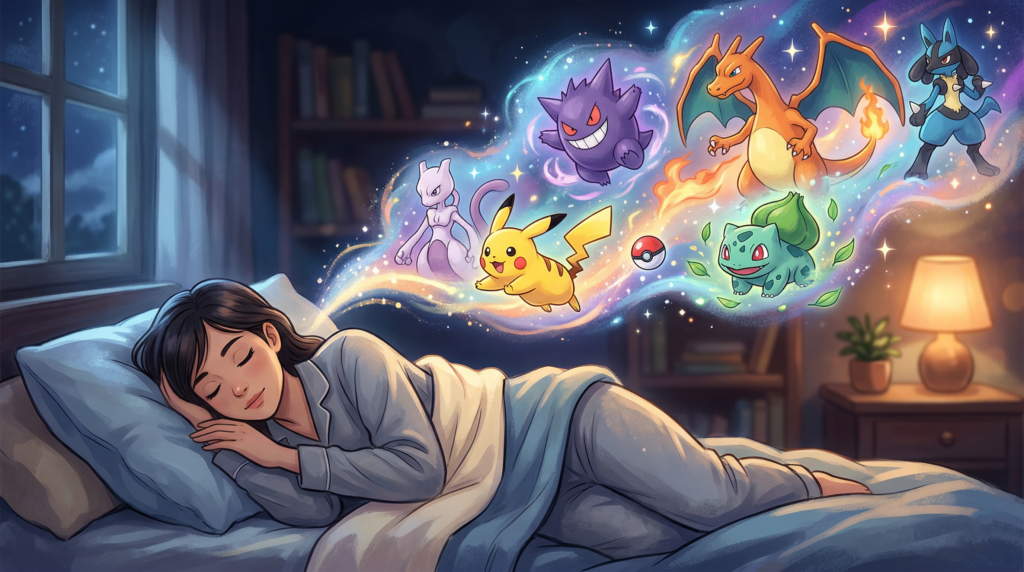
You open your eyes, blinking against the morning light, but your mind is still lingering in patches of tall grass. For a fleeting second, you feel the phantom weight of a Pokeball in your hand, or perhaps you wake up with your heart racing after a chaotic gym battle that felt entirely too real. If this sounds familiar, you are not alone. Experiencing vivid Pokemon dreams is an incredibly common phenomenon, especially for those who spend time engaging with the digital world of gaming.
While it might feel a bit silly to admit that your nighttime hours are spent wandering through the Kanto region or managing a team of pixelated companions, these dreams are far from random glitches in your brain. In the realms of sleep science and holistic well-being, the imagery we encounter while unconscious serves as a profound mirror. Your dreams are a direct window into how your subconscious mind processes daily habits, manages underlying stress, and attempts to build emotional connections.
In this comprehensive guide, we will bridge the gap between the digital world and the dream world. We will explore the fascinating neuroscience behind why your brain plays games while you sleep, decode the hidden psychological meanings behind these digital adventures, and provide holistic strategies to quiet a hyperactive mind for deeper, more restorative rest.
The Neuroscience: Why Does Your Brain Play Games While You Sleep?
To understand why you are dreaming about capturing mythical creatures, we first have to look at the mechanical functions of the sleeping brain. Sleep is not a passive state of shutting down; it is an incredibly active period of cognitive housekeeping.
The Tetris Effect and Game Transfer Phenomena
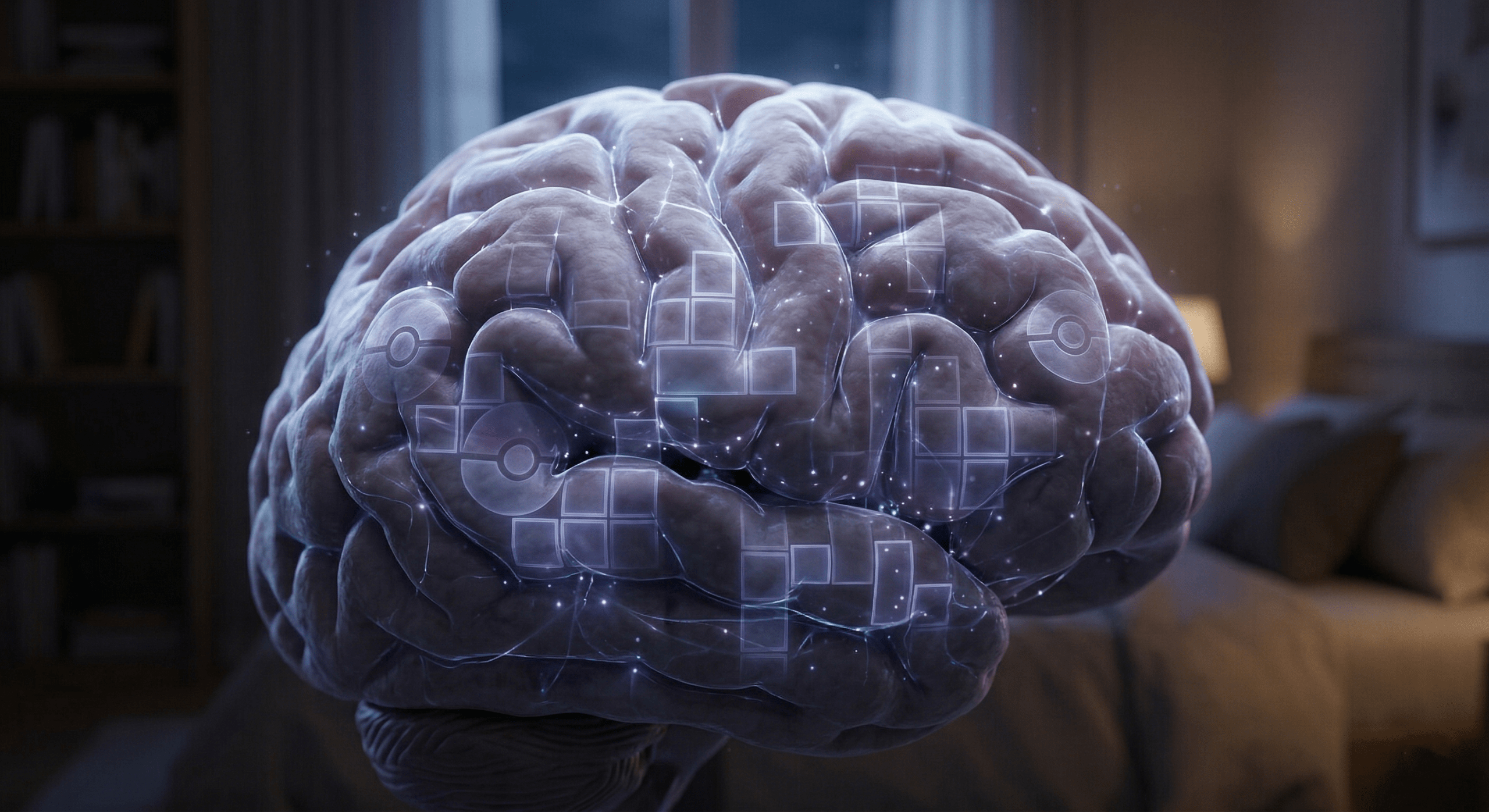
In the realm of psychology, there is a well-documented neurological occurrence known as the “Tetris Effect.” Originally coined after the popular block-stacking game, it describes how people who devote a significant amount of time and attention to an activity begin to pattern their thoughts, mental images, and dreams around it. When you spend hours strategizing, catching, or battling in a visually engaging game, you are heavily reinforcing specific neural pathways.
Your brain is a highly efficient pattern-recognition machine. Even after you power down the console or lock your phone, your mind continues to look for those established patterns. This is part of a broader category known as Game Transfer Phenomena (GTP), where the mechanics of a video game bleed over into sensory perceptions and dreamscapes.
Hypnagogic Imagery: The Gateway to Sleep
Have you ever closed your eyes to sleep and suddenly seen vivid, floating images—perhaps a Charizard soaring past or a menu screen of stats hovering in the dark? This occurs during hypnagogia, the transitional state between wakefulness and sleep.
During the hypnagogic phase, the brain begins to loosen its grip on reality, producing a flood of sensory experiences. Because the bright, contrasting colors and repetitive motions of gaming are fresh in your short-term memory, they are often the first images your brain projects onto the back of your eyelids as you drift off.
Memory Consolidation and Neuroplasticity
As you move deeper into the night and enter Rapid Eye Movement (REM) sleep, your brain begins the critical work of memory consolidation. REM sleep acts as a filing cabinet for your experiences, deciding what to keep and what to discard. If a significant portion of your waking life is spent engaging with a game, your brain utilizes that specific visual language to process complex information, strengthen spatial reasoning, and organize emotional data. In short, your brain is using the mechanics of the game as a tool to map out your real-world experiences.
Decoding the Subconscious: What Your Pokemon Dreams Actually Mean
While the neuroscience explains the how, the field of dream interpretation helps us understand the why. The subconscious mind relies heavily on symbols and metaphors. When it borrows the framework of a video game, it is usually trying to communicate deeper psychological truths about your waking life.
The “Gotta Catch ‘Em All” Mindset: Goal Orientation and Control

Dreams centered heavily around endless searching, capturing, or completing a Pokedex rarely have anything to do with the game itself. Psychologically, this scenario is tied to goal orientation and control.
If you find yourself frantically trying to catch ’em all in a dream, it may reflect real-life feelings of chasing ambitions, dealing with perfectionism, or an overwhelming desire to manage the unpredictable aspects of your waking life. It can be a sign that you are pushing yourself too hard to accumulate achievements, prompting a need to evaluate whether your waking goals are fulfilling or simply exhausting.
Battles and Gyms: Processing Stress and Conflict
Turn-based combat in the digital world often mirrors real-world anxieties in the dream world. Facing a seemingly unbeatable Gym Leader or finding your team outmatched in a dream usually points to waking stress. A tough battle might symbolize a looming deadline at work, a difficult upcoming conversation, or a deep internal struggle for emotional balance. The way you handle the battle in the dream—whether you strategize calmly or panic and run away—can offer valuable insights into your current stress-response mechanisms.
The Buddy System: Companionship and Empathy
Many people report dreams where the primary focus isn’t battling, but simply existing alongside a specific creature as a companion. These dreams tap into the fundamental human need for loyalty, unconditional support, and emotional safety. If you are feeling isolated, misunderstood, or disconnected in your waking relationships, your subconscious may generate a loyal “buddy” to fulfill that temporary need for connection and empathy.
Dream Dictionary: Common Scenarios and Their Holistic Interpretations
To help you decode your specific nighttime adventures, here is a breakdown of common gaming-related dream scenarios, their psychological translations, and how you can apply these insights to your daily life.
| Dream Scenario | Psychological Translation | Real-World Application |
| Failing to catch a rare creature | Feelings of missed opportunities, inadequacy, or fear of failure. | Practice self-compassion, recognize that not every opportunity defines you, and let go of rigid perfectionism. |
| Your team is injured or fainting | Signifies burnout, physical exhaustion, or severe emotional depletion. | A glaring red flag from your subconscious to prioritize deep rest, nutrition, and immediate self-care. |
| Witnessing an evolution | Represents personal growth, overcoming a significant hurdle, or stepping into a new phase of life. | Acknowledge your hard work, celebrate your recent milestones, and embrace the transitions happening in your life. |
| Getting lost in a cave or forest | Feeling entirely stuck, lacking direction, or being overwhelmed by daily decision fatigue. | Take a step back. Practice grounding techniques, break large problems into smaller, manageable steps, and seek clarity over speed. |
The Impact of Screen Time on Sleep Architecture
While these dreams can be fascinating to analyze, experiencing them too frequently or intensely can be a symptom of poor sleep hygiene. How we interact with screens heavily dictates the quality of our rest and, by extension, our overall daytime happiness.
The Blue Light Disruptor
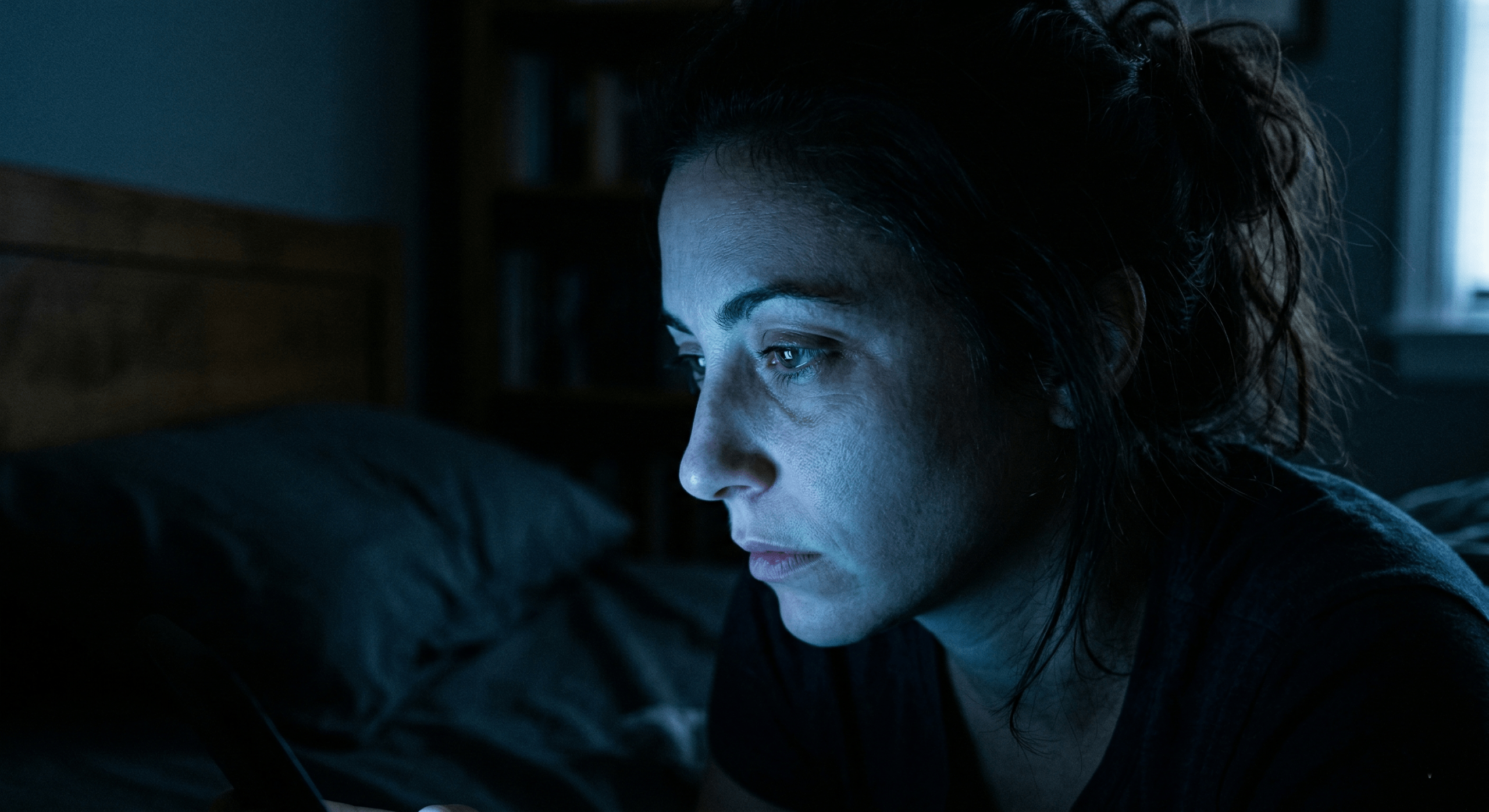
The screens we use for gaming emit high levels of blue light. This specific wavelength of light mimics daylight, which directly suppresses the pineal gland’s production of melatonin—the hormone responsible for regulating your sleep-wake cycle. When melatonin is delayed, the onset of restorative sleep is pushed back, extending the time you spend in lighter, more easily disrupted sleep stages.
Dopamine and the Restless Mind
Gaming is designed around a continuous reward loop. Finding a rare item, leveling up, or winning a battle triggers a spike of dopamine in the brain. While this feels great in the moment, it leaves the nervous system highly stimulated. When you transition directly from a high-dopamine activity to bed, it becomes neurologically difficult for the mind to wind down. The brain is still craving that stimulation, leading to a restless, racing mind that struggles to achieve the deep, slow-wave sleep necessary for physical recovery.
Fragmented REM Sleep
Intense, action-packed dreams can actually fragment your REM sleep. If a dream is too vivid or stressful, it can cause micro-awakenings throughout the night. Even if you don’t fully remember waking up, these interruptions prevent you from completing full sleep cycles. This is why you might sleep for eight hours after a long gaming session but still wake up feeling exhausted and emotionally drained.
Holistic Solutions: How to Reclaim Your Sleep and Quiet Your Mind

Achieving a calm brain is essential for both holistic well-being and high-quality sleep. If your gaming dreams are leaving you fatigued, it is time to implement routines that help your nervous system transition from a state of high alert to a state of profound rest.
1. Enforce a “Digital Sunset”
The single most effective way to improve your sleep architecture is to establish a screen-free window before bed. Aim for a “digital sunset” at least one to two hours before you plan to sleep. This signals to your brain that the “game” is over for the day, allowing melatonin production to rise naturally.
2. Utilize Habit and Health Tracking
Awareness is the first step toward change. Consider utilizing a sleep score tracker to monitor how your daily habits interact with your dream state. By tracking variables—such as the exact time you power down your screens, your daily stress levels, or even biological rhythms like hormone cycles—you can begin to see distinct patterns. You might notice that your most restless, game-heavy dreams occur on days when your screen time extends past 9:00 PM or when your physical exhaustion is at its peak.
3. Meditation and Breathwork for Gamers
Transitioning out of a dopamine-heavy activity requires intentional grounding. Incorporate mindfulness practices into your nighttime routine to activate the parasympathetic nervous system (your “rest and digest” mode).
-
The 4-7-8 Breathing Method: Inhale deeply for 4 seconds, hold the breath for 7 seconds, and exhale slowly for 8 seconds. Repeat this cycle four times to rapidly lower a resting heart rate.
-
Body Scan Meditation: Lie in bed and mentally focus on releasing tension in each muscle group, starting from your toes and working up to the crown of your head.
4. Alternative Wind-Down Rituals
Replace the late-night scrolling and gaming with tactile, calming activities. Reading a physical book, gentle stretching, or journaling are excellent ways to anchor your mind in the physical world. Writing down your thoughts—or even sketching out the dreams you’ve been having—can act as a cognitive release valve, preventing those thoughts from bouncing around your subconscious all night.
Expert Insights: When to Embrace the Dream
While optimizing your sleep is crucial, it is also important not to pathologize every vivid dream. Sometimes, the brain simply wants to play.
Neuro-Adaptability and Trauma Protection
Fascinating research into the Tetris Effect has shown that engaging in highly visual-spatial gaming shortly after a traumatic event can actually disrupt the formation of intrusive memories. The brain uses the spatial demands of the game to “compete” for the same cognitive resources that would otherwise store the trauma. In a way, a mind that dreams in the language of a game is demonstrating remarkable neuro-adaptability and resilience.
The Playful Subconscious
If your Pokemon dreams are not causing you distress or disrupting your energy levels, there is no need to worry. The subconscious mind is deeply creative. Sometimes, generating a fantastical dreamscape is simply your brain’s way of releasing the tension of the day, seeking out joy, and exploring scenarios outside the rigid boundaries of adult responsibilities. Embrace the adventure for what it is: a testament to your mind’s incredible imagination.
Frequently Asked Questions (FAQs)
Are frequent gaming dreams a sign of an addiction?
Not necessarily. Dreaming about a game frequently is usually just a symptom of the Tetris Effect—your brain processing an activity you’ve spent a lot of time on recently. However, if gaming is interfering with your daily responsibilities, causing you emotional distress, or if the dreams are severely impacting your ability to get restful sleep, it may be worth evaluating your screen-time habits.
Why do I dream about games I haven’t played since childhood?
The subconscious is a vast archive. When you dream of a childhood game, your brain is often pulling from long-term memory to process current emotions. It may be using the nostalgia of that game to evoke feelings of safety, simplicity, or comfort during a waking period of high stress or uncertainty.
Can these dreams actually improve my mood?
Yes. In psychology, there is a concept known as wish-fulfillment. If you experience a highly positive, triumphant, or comforting dream—even if it takes place in a fictional world—the emotional resonance of that dream can carry over into your waking life, leaving you feeling more optimistic and energized the next day.
How can I stop having these specific dreams?
The most effective method is to create distance between the activity and your bedtime. Implementing the “digital sunset” rule, engaging in a non-screen-related hobby before bed, and practicing mindfulness will significantly reduce the frequency of game-transfer phenomena in your sleep.
Conclusion
The intersection of our digital lives and our biological needs is a fascinating landscape. Having Pokemon dreams is not a sign that your brain is malfunctioning; rather, it is a brilliant display of the Tetris Effect in action, showcasing how your subconscious sorts, files, and attempts to make sense of your daily experiences.
By understanding the neurological triggers and decoding the emotional symbolism behind these nighttime adventures, you can gain profound insights into your waking stressors and desires. More importantly, by taking actionable steps to curate a calm brain—through digital sunsets, breathwork, and mindful habit tracking—you can ensure that your mind gets the deep, restorative rest it needs.
The next time you wake up from a digital adventure, take a moment to reflect. Your mind is simply doing its job. Evaluate your evening routines, prioritize your holistic well-being, and give your nervous system the tools it needs to truly power down for the night.