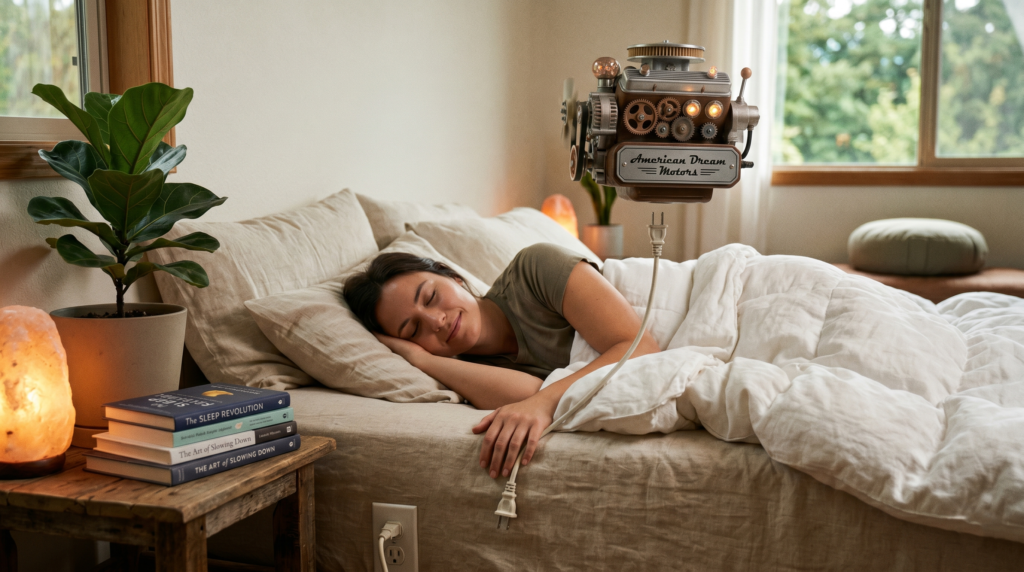
Picture this: It is 2:00 AM. The house is completely silent, the lights are off, and your body aches with physical exhaustion. Yet, you are lying wide awake, staring blankly at the dark ceiling. Your mind is racing at a hundred miles an hour, cycling through tomorrow’s endless to-do lists, pending emails, financial goals, and the lingering pressure to achieve more. You are experiencing the relentless revving of what I call your American dream motors—the internalized, psychological engine of modern hustle culture that tells you your worth is tied solely to your productivity and material success.
While this societal engine might drive career advancements and financial milestones, it is secretly destroying your holistic well-being. Chronic hyperarousal fueled by this constant need to “grind” is wrecking our sleep architecture, crushing our ability to recall dreams, and silently sapping our baseline happiness.
If you are tired of waking up exhausted, feeling disconnected from your inner self, and living in a state of perpetual burnout, it is time for a change. By learning to intentionally unplug these motors, you can reclaim your evenings, achieve deeply restorative sleep, and redefine happiness on your own holistic terms. Here is your comprehensive guide to silencing the noise of hustle culture.
What is the “American Dream Motor” Doing to Your Brain?
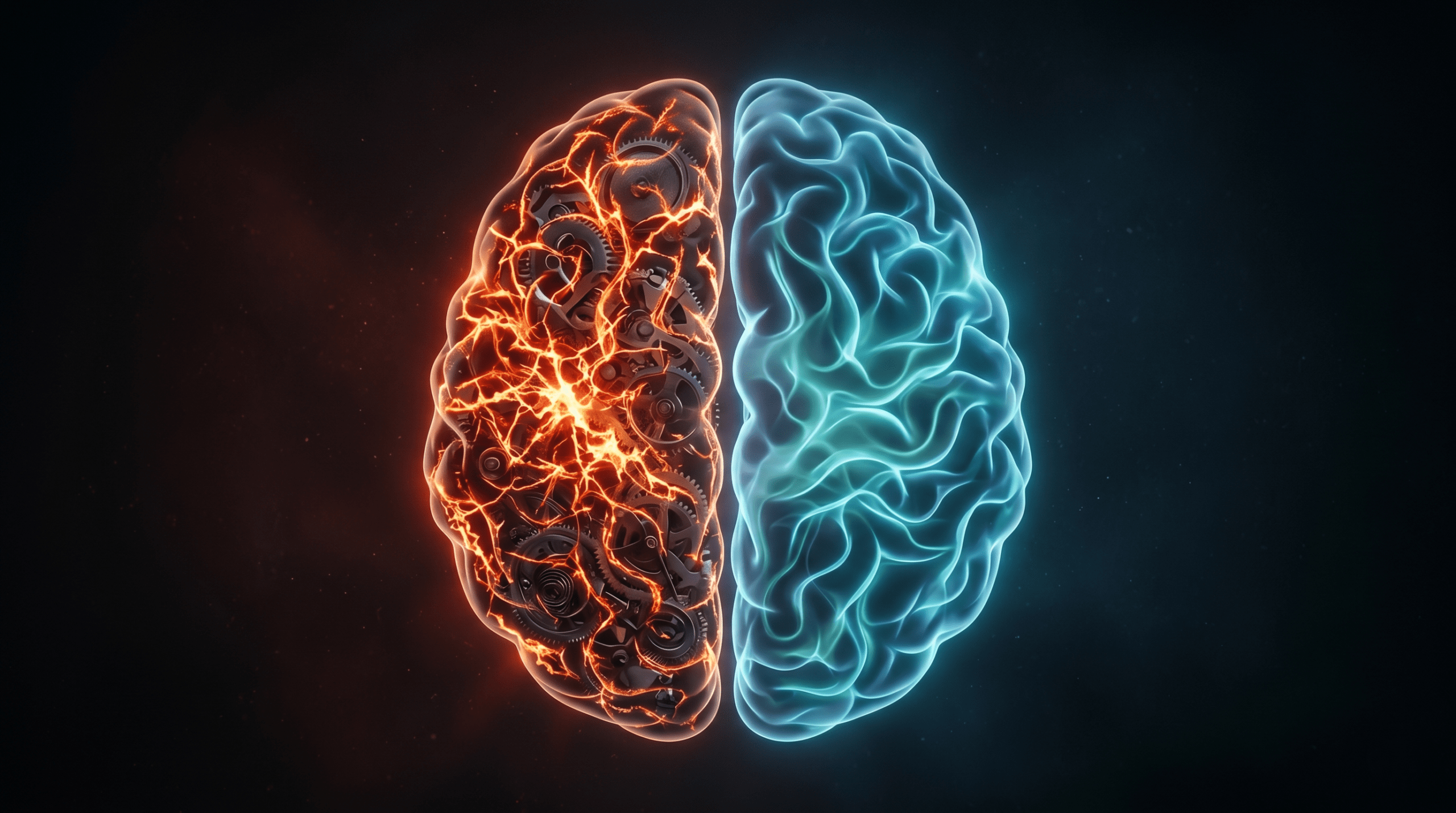
To understand how to fix the problem, we first need to understand the mechanics of the engine. The modern pursuit of success has fundamentally altered the way our nervous systems operate. We were biologically designed to experience short bursts of stress (running from a predator) followed by long periods of rest and communal gathering. Today, however, our stressors are chronic, invisible, and constant.
The Cortisol Trap and Chronic Hyperarousal
When you are constantly pushing yourself to climb the corporate ladder, build a side hustle, or maintain a picture-perfect lifestyle, your brain perceives this high-stakes environment as a survival threat. This keeps your sympathetic nervous system—the body’s “fight-or-flight” mechanism—permanently activated.
Your adrenal glands respond by pumping out cortisol and adrenaline. In a healthy circadian rhythm, cortisol levels naturally peak in the morning to wake you up and gradually taper off by the evening, allowing melatonin (the sleep hormone) to take over. However, when your American dream motors are running idle in the background, nighttime cortisol levels remain artificially elevated. This phenomenon, known as chronic hyperarousal, makes it physiologically impossible for your brain to comfortably transition into a state of rest. You are quite literally trying to sleep with one eye open, scanning for the next email or deadline.
“Productivity Guilt” and the Inability to Rest
Beyond the biological impact, there is a profound psychological toll. Hustle culture breeds a toxic mindset known as “productivity guilt.” Have you ever tried to sit on the couch and read a fiction book, only to feel a nagging sense of guilt that you should be doing something “productive”?
This is the psychological motor refusing to shut down. When society equates busyness with importance, resting begins to feel like a moral failure or a sign of laziness. This cognitive distortion prevents us from enjoying the downtime necessary for our brains to heal, process emotions, and regenerate.
Expert Insight:
Clinical sleep specialists and neuroscientists increasingly point to modern workplace stress and “always-on” culture as the leading culprits behind the global insomnia epidemic. Chronic stress doesn’t just make it hard to fall asleep; it fundamentally alters the quality of the sleep you do manage to get, leaving you cognitively impaired the next day.
The Hidden Toll on Your Sleep Architecture
It is a common misconception that sleep is simply a state of “being turned off.” In reality, sleep is a highly active, complex, and beautifully orchestrated biological process. When you bring the anxiety of hustle culture to bed, you disrupt this delicate sleep architecture.
Fragmented Sleep vs. Deep Rest
A healthy night of sleep is divided into 90-minute cycles that alternate between Non-Rapid Eye Movement (NREM) and Rapid Eye Movement (REM) sleep. The most restorative phase of NREM is Stage 3, also known as slow-wave or Delta sleep. This is when your body repairs tissues, builds bone and muscle, and strengthens the immune system.
When your mind is burdened by the pressure to succeed, your brain remains vigilant. This vigilance prevents you from sinking into deep Delta sleep, trapping you in the lighter stages of sleep (Stages 1 and 2). The result? Fragmented sleep. You wake up repeatedly throughout the night, often without fully realizing it, and your body is robbed of its physical recovery time. You awake feeling just as tired as when you went to bed.
Where Have All Your Dreams Gone?
Dreams are not just random neurological misfires; they are essential for holistic well-being. REM sleep, the stage where most of our vivid dreaming occurs, acts as overnight therapy. It is the time when the brain processes complex emotions, consolidates memories, and clears out the psychological debris of the day.
When you are chronically sleep-deprived due to stress, your brain prioritizes deep NREM sleep over REM sleep in a desperate bid for physical survival. Consequently, your dream life evaporates. A lack of REM sleep is directly correlated with increased anxiety, emotional reactivity, and a higher risk of depression. If you cannot remember the last time you had a vivid, meaningful dream, it is a glaring warning sign that your internal motor is running too hot.
Hustle Culture vs. Holistic Rest: A Sleep Cycle Comparison
| Metric | The Hustle Culture Sleep Cycle | The Holistic Rest Sleep Cycle |
| Sleep Latency | 45+ minutes (Mind racing, tossing and turning) | 10-20 minutes (Smooth transition to sleep) |
| Nighttime Awakenings | Frequent; difficulty falling back asleep | Rare; brief and easily resolved |
| Delta Sleep (Deep) | Minimal; body feels unrecovered | Optimal; physical repair and immune boost |
| REM Sleep (Dreams) | Suppressed; poor emotional regulation | Robust; vivid dreams, waking up emotionally refreshed |
| Morning Energy | Brain fog, reliant on heavy caffeine | Clear-headed, natural energy curve |
Your Blueprint for Silencing the Noise and Reclaiming Your Night
Understanding the damage is only the first step. The real transformation happens when you take actionable, scientifically-backed steps to unplug your American dream motors. You do not have to abandon your goals or quit your job to find peace; you simply need to create boundaries that allow your mind to fully detach. Here are five holistic strategies to down-regulate your nervous system.
1. The “Digital Sunset” (Disconnecting from the Matrix)
The screens we stare at are the primary fuel for hustle culture. They are portals to endless work emails, hustle-bro podcasts, and social media feeds that trigger comparison and inadequacy. Furthermore, the blue light emitted by our devices actively suppresses the pineal gland’s production of melatonin.

The Fix: Implement a strict “Digital Sunset” 90 minutes before your head hits the pillow. Treat this boundary as sacred. Put your phone on a charger in another room, close the laptop, and turn off the television. Replace screen time with analog activities: reading a physical book, taking a warm bath, doing light stretching, or engaging in quiet conversation.
2. Somatic Down-Regulation through Breathwork
When your mind is racing with tomorrow’s deadlines, you cannot simply think your way into relaxation. You have to use your body to send safety signals to your brain. This is where somatic practices like breathwork become invaluable.
The Fix: Practice the 4-7-8 breathing technique when you get into bed.
-
Exhale completely through your mouth.
-
Close your mouth and inhale quietly through your nose to a mental count of four.
-
Hold your breath for a count of seven.
-
Exhale completely through your mouth, making a whoosh sound to a count of eight.
Repeat this cycle four times. This specific ratio acts as a natural tranquilizer for the nervous system, immediately shifting your body from sympathetic (stress) to parasympathetic (rest and digest) dominance.
3. The “Brain Dump” Journaling Method
One of the main reasons we lie awake is because our brains are desperately trying to remember all the things we need to do. The brain is an excellent tool for processing information, but it is a terrible filing cabinet.

The Fix: Keep a dedicated notebook and pen on your nightstand. About an hour before bed, do a “Brain Dump.” Write down every lingering task, every unresolved anxiety, and every brilliant idea that pops into your head. By externalizing these thoughts onto paper, you are effectively offloading the cognitive burden. You are telling your brain, “It’s safe on the paper; you don’t need to hold onto this until morning.”
4. Redefining Your Metrics for Success
You cannot truly unplug your American dream motors without addressing the philosophical root of the problem. If your entire identity is wrapped up in your professional output, stepping away from work will always feel dangerous.
The Fix: Actively redefine what a “successful day” looks like. Expand your metrics beyond financial gain or checked-off tasks. Did you spend uninterrupted time with your partner? Did you take a walk in the sun? Did you eat a nourishing meal? Did you allow yourself 20 minutes to meditate? By validating these holistic activities as crucial components of success, you dismantle the power that hustle culture has over your self-worth.
5. Creating a Sacred Sleep Sanctuary
Your bedroom should be a physical cue to your brain that the workday is officially over. If your bed is covered in laundry, your desk is feet away from your pillow, and the room is brightly lit, your brain will remain in a state of high alert.
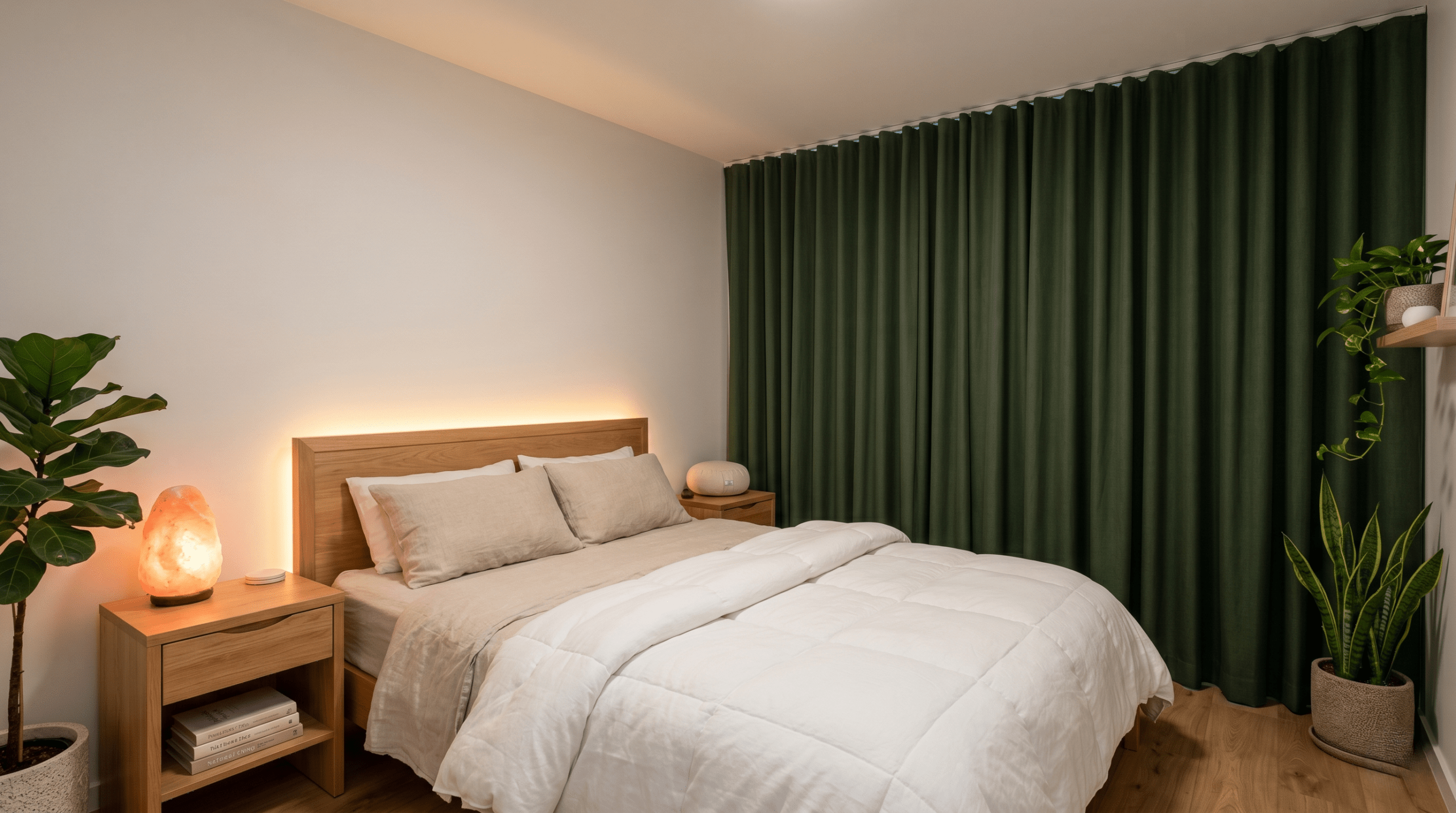
The Fix: Transform your bedroom into a sensory sanctuary dedicated exclusively to sleep and intimacy.
-
Temperature: Keep the room cool (around 65°F or 18°C), which mimics the natural drop in core body temperature required for sleep.
-
Light: Invest in high-quality blackout curtains. Even a sliver of streetlight can disrupt melatonin production.
-
Scent: Use aromatherapy, such as lavender or chamomile essential oils, to create an olfactory association with relaxation.
Why a Quiet Mind is the Ultimate Luxury
In a society that commodifies every waking second, choosing to rest is an act of quiet rebellion. When you finally succeed in unplugging your American dream motors, the aftermath is profoundly beautiful. You do not lose your ambition; instead, you refine it.
Frantic, anxiety-driven energy is replaced by focused, sustainable energy. You will find that true creativity, sharp intuition, and genuine joy do not arise from a state of exhaustion, but from a well-rested, quiet mind. Reclaiming your sleep is not just about feeling less tired; it is about reclaiming your sovereignty. It is about waking up to your life, fully present, emotionally resilient, and capable of experiencing happiness that is not contingent on your productivity.
Frequently Asked Questions About Stress, Sleep, and Hustle Culture
Will I lose my ambition if I stop “hustling” so hard?
No. This is a common fear engineered by hustle culture. Rest does not destroy ambition; it preserves it. Chronic burnout leads to cognitive decline, lack of motivation, and poor decision-making. By prioritizing sleep and down-time, you actually enhance your executive functioning, allowing you to achieve your goals with greater efficiency and creativity, rather than brute-forcing your way through exhaustion.
How long does it take to repair my sleep schedule after chronic burnout?
Healing is not linear, and it depends on how long your nervous system has been running in overdrive. However, if you consistently apply sleep hygiene practices like the digital sunset and strict wake-up times, you can begin to reset your circadian rhythm in as little as two to three weeks. Deep neurological recovery and the return of vivid REM sleep may take a few months of sustained holistic care.
What is the fastest way to calm a racing mind in the middle of the night?
If you wake up at 3 AM and cannot fall back asleep within 20 minutes, do not stay in bed tossing and turning—this trains your brain to associate the bed with anxiety. Get out of bed, move to a dimly lit room, and engage in a non-stimulating activity (like reading a boring book or doing gentle stretching). Practice a Non-Sleep Deep Rest (NSDR) protocol or a body scan meditation to lower your heart rate. Only return to bed when your eyelids feel genuinely heavy.
Time to Power Down
The pressure to constantly achieve, produce, and consume is louder today than ever before. But you have the power to step off the treadmill. By understanding the biological and psychological toll of hustle culture, protecting your sleep architecture, and implementing firm holistic boundaries, you can unplug those demanding American dream motors.
Tonight, I challenge you to try just one technique from this guide. Start with the Digital Sunset. Put the phone away, brew a cup of herbal tea, and give yourself the ultimate luxury: the permission to simply rest. Your mind, your body, and your dreams will thank you.