

It is 5:30 PM on a Thursday. You are exhausted, your brain feels like static, and the lingering stress of the workday is tightly wound within your nervous system. You meet up with friends, glance at the menu, and suddenly, you want nothing more than a dozen ice-cold bivalves on the half shell. If you frequently find yourself seeking out happy hour oysters, you are not just indulging in a trendy after-work ritual. You are actually responding to a profound biological signal. Your brain is actively craving the exact micronutrients it needs to switch off work mode, regulate your mood, and prepare your body for deep, restorative sleep.
In the modern world, evening anxiety, brain fog, and poor sleep quality are widespread epidemics. We often blame our screens or our schedules, but we rarely look at our plates. The emerging field of nutritional psychiatry highlights how specific, bioavailable foods directly impact our mental health and circadian rhythms.
As a holistic wellness expert, I want to reframe how you look at this beloved appetizer. This comprehensive guide explores the fascinating science behind your seafood cravings and reveals how a mindful oyster happy hour might just be the ultimate, science-backed intervention for better sleep and daily happiness.
The Neuroscience of Your Cravings: Why We Seek Out Happy Hour Oysters

When we are chronically stressed or sleep-deprived, the body enters a state of rapid nutrient depletion. Cortisol, our primary stress hormone, burns through our reserves of essential minerals and vitamins at an alarming rate. By the time the workday ends, your brain is starved for the building blocks required to repair neural pathways and synthesize calming neurotransmitters.
Your craving for oysters is an example of intuitive eating at its finest. Your body recognizes that these bivalves are one of the most nutrient-dense whole foods on the planet, offering a highly bioavailable package of neuro-protective compounds.
Furthermore, the timing is no coincidence. The “happy hour” window—typically between 4:00 PM and 6:00 PM—represents a critical psychological boundary. It is the transitional period where the nervous system attempts to shift from the sympathetic “fight or flight” state of the workday to the parasympathetic “rest and digest” state of the evening. Consuming neuro-supportive nutrients during this precise window gives your brain the chemical tools it needs to successfully make that transition.
Zinc: The Ultimate Sleep and Serotonin Mineral
When it comes to brain health, zinc is the undisputed heavyweight champion, and oysters are the highest natural dietary source of this vital mineral on earth. A single serving of oysters provides well over the daily recommended intake of zinc, delivering it in a form your body can absorb almost instantly.
But how does this translate to sleep and happiness?
Zinc plays an irreplaceable role in the complex biochemical pathway that regulates your sleep-wake cycle. It acts as an essential co-factor in the conversion of tryptophan (an amino acid) into serotonin (the “happiness” neurotransmitter). Serotonin is then subsequently converted into melatonin, the hormone responsible for dictating your sleep architecture and ensuring you enter the deepest, most restorative phases of sleep.
Expert Insight: Clinical studies in nutritional psychiatry have repeatedly linked systemic zinc deficiency to clinical insomnia, sleep disturbances, and mood disorders. By replenishing your zinc levels in the late afternoon, you are directly fueling your brain’s melatonin production for the night ahead.
Omega-3 Fatty Acids: Calming the Anxious Mind
Most people associate Omega-3 fatty acids with salmon or fish oil supplements, but oysters are a spectacular, clean source of both EPA (eicosapentaenoic acid) and DHA (docosahexaenoic acid).
These specific long-chain fatty acids are critical for managing daily happiness because they serve as powerful anti-inflammatory agents in the brain. Chronic work stress creates low-grade neuro-inflammation, which manifests as brain fog, irritability, and an inability to wind down.
Omega-3s act like a soothing balm for an overactive nervous system. They lower cortisol levels, reduce inflammation, and support neuroplasticity—the brain’s ability to adapt to stress. By consuming a plate of oysters during happy hour, you are delivering a potent dose of Omega-3s that immediately goes to work calming an anxious mind, making you feel more present and grounded for your evening.
Vitamin B12 and Dopamine: The Mood Elevators
It is impossible to discuss daily happiness without mentioning dopamine, the neurotransmitter responsible for feelings of reward, motivation, and joy. To synthesize dopamine, your body requires an abundance of Vitamin B12.
Many adults walk around with sub-optimal levels of B12, leading to unexplained fatigue, mood swings, and a general sense of apathy. Oysters are a B12 powerhouse. Just a few oysters can provide over 300% of your daily required B12.
This massive influx of B-vitamins revitalizes the central nervous system. It acts as a clean, natural mood elevator, combating the mid-afternoon slump without the jittery side effects of caffeine or the inevitable crash of sugar. This is why you often feel a distinct sense of clarity, energy, and elevated mood shortly after consuming them.
Mindful Indulgence: How the “Happy Hour” Ritual Supports Mental Well-being
To truly harness the holistic benefits of your evening seafood craving, we must look beyond the purely nutritional aspects and examine the behavioral psychology of the ritual itself. For decades, the traditional after-work gathering has been synonymous with excessive alcohol consumption and deep-fried bar snacks—habits that actively sabotage sleep hygiene and spike evening cortisol.
By shifting our focus toward a nutrient-dense option, we redefine this cultural staple. We transform it from a mindless coping mechanism into a practice of mindful indulgence.
The Power of Social Buffering and Oxytocin
Human beings are inherently social creatures, and our nervous systems co-regulate with the people around us. Sharing a plate of fresh seafood with friends or colleagues facilitates a psychological phenomenon known as “social buffering.” Engaging in positive, face-to-face social interaction releases oxytocin, widely known as the bonding hormone.
Oxytocin acts as a natural antagonist to cortisol. When you combine the profound nutritional benefits of zinc, Omega-3s, and B12 with the oxytocin boost of community connection, you create a powerful, dual-action neurochemical cocktail. This combination tells your amygdala (the brain’s fear and stress center) that you are safe, supported, and ready to rest.
Mindful Eating Practices
Oysters inherently demand a level of presence that a handful of pretzels does not. They require a sensory-rich eating experience, which is a cornerstone of mindfulness. To maximize the mental health benefits of your happy hour oysters, try to eat them with intentionality:
-
Engage your senses: Notice the bracing chill of the shell, the rough texture of the exterior, and the distinct, oceanic aroma.
-
Chew consciously: Rather than swallowing them whole, chew them gently to release their full flavor profile and maximize enzymatic breakdown for better nutrient absorption.
-
Acknowledge the terroir: Just as with fine wine, oysters reflect their environment (their merroir). Tasting the difference between a briny East Coast oyster and a creamy West Coast oyster grounds your brain in the present moment, pulling you out of the ruminating thoughts of the workday.
Designing the Perfect, Sleep-Friendly Oyster Happy Hour
If your goal is better sleep and holistic well-being, the context in which you consume your food is just as important as the food itself. A poorly executed happy hour can easily negate the incredible brain benefits these bivalves offer. Here is how to design the perfect, sleep-enhancing ritual.
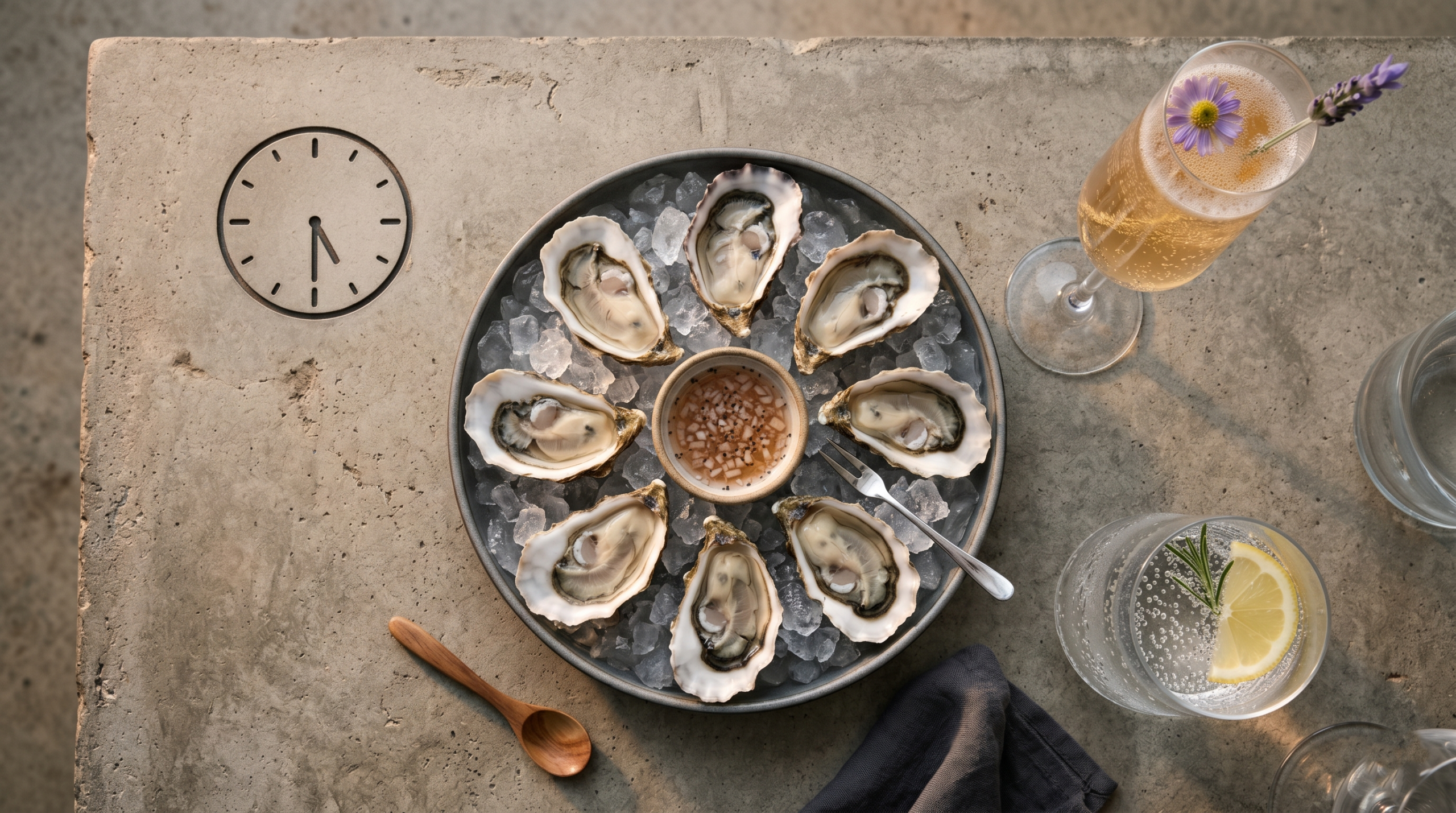
Strategic Timing and the Circadian Rhythm
Your circadian rhythm—the internal 24-hour clock that regulates your sleep-wake cycle—relies heavily on cues from digestion and body temperature. Consuming heavy meals too close to bedtime forces your body to expend energy on digestion, elevating your core body temperature and disrupting the onset of REM sleep.
The beauty of the 5:00 PM to 6:00 PM happy hour window is that it perfectly aligns with chronobiological best practices. Eating your oysters during this late-afternoon timeframe allows your digestive system ample time to break down the proteins and absorb the sleep-promoting zinc and magnesium long before your head hits the pillow.
Smart Pairings for a Calm Brain
What you drink alongside your food can make or break your sleep architecture. The classic pairing of martinis or heavy stouts might taste culturally appropriate, but heavy alcohol consumption is a known sleep disruptor, causing fragmented rest and suppressing REM cycles.
What to Avoid:
-
High-sugar cocktails: Margaritas and syrups will spike your blood glucose, leading to a late-night cortisol surge.
-
Heavy liquor: Large amounts of alcohol block the absorption of B-vitamins, completely neutralizing the mood-boosting effects of your meal.
What to Choose:
-
Herbal Mocktails: Enhance the calming effects by pairing your food with a chamomile or lavender-infused sparkling mocktail. These botanicals contain apigenin, an antioxidant that binds to receptors in your brain to decrease anxiety and initiate sleep.
-
Sparkling Mineral Water with Lemon: The carbonation cleanses the palate, while the added minerals support cellular hydration.
-
Dry, Low-Sulfite Wine: If you choose to drink alcohol, limit it to a single glass of bone-dry white wine, such as a Chablis or Muscadet. These lower-alcohol options contain minimal residual sugar, reducing the risk of a midnight blood sugar crash.
Sourcing and Safety: Consuming Oysters Consciously
As an expert in holistic health, I must emphasize that true wellness requires an understanding of sourcing, sustainability, and safety.

Prioritizing Sustainable Aquaculture
Oysters are widely considered one of the most environmentally sustainable sources of animal protein on the planet. They are filter feeders, meaning they actively clean the waterways in which they grow. A single adult oyster can filter up to 50 gallons of water a day, removing excess nitrogen and improving marine ecosystems. By choosing sustainably farmed oysters, you are supporting environmental regeneration, which is a core tenet of holistic, conscious living.
Navigating the Safety Guidelines
Raw seafood inherently carries risks, primarily from Vibrio bacteria. To safely enjoy your happy hour oysters, adhere to the following E-E-A-T backed guidelines:
-
Know your source: Only consume raw seafood from reputable, high-turnover establishments that adhere to strict cold-chain management.
-
Look for visual cues: The shell should be tightly closed before shucking, and the meat should look plump, opaque, and smell like a fresh ocean breeze, never intensely “fishy.”
-
Consider cooked alternatives: Pregnant women, the elderly, and anyone with a compromised immune system or liver disease should strictly avoid raw oysters. Fortunately, lightly steaming, grilling, or baking oysters (like Oysters Rockefeller with spinach) preserves the vast majority of their zinc, Omega-3s, and B12, allowing everyone to safely enjoy their sleep-promoting benefits.
Frequently Asked Questions (FAQs) About Oysters, Sleep, and Mood
Q: Can eating happy hour oysters really help me sleep better? A: Yes. Oysters are packed with bioavailable zinc, magnesium, and omega-3 fatty acids. Zinc is a mandatory co-factor in the brain’s production of serotonin and melatonin, the hormones that regulate your sleep cycles and allow you to achieve deep, restorative rest.
Q: How many oysters should I eat to experience the health benefits? A: You do not need to eat a massive quantity to reap the rewards. Just 3 to 6 oysters provide well over your daily requirement for zinc and Vitamin B12, making a standard half-dozen order the perfect therapeutic dose for brain health.
Q: Do cooked oysters have the same brain benefits as raw oysters? A: Mostly, yes. While a very small percentage of water-soluble vitamins might degrade during high-heat cooking, the primary sleep-promoting minerals—like zinc, magnesium, and Omega-3 fatty acids—remain completely intact and highly bioavailable when steamed, baked, or grilled.
Q: What is the best time of day to eat oysters for sleep? A: The ideal time is late afternoon or early evening, typically between 4:00 PM and 6:00 PM. This timing gives your body the nutrients it needs to synthesize sleep hormones while allowing your digestive system to rest before bedtime, ensuring your circadian rhythm remains undisturbed.
Conclusion: Transforming a Social Habit into a Holistic Wellness Tool
The next time you feel a sudden craving for happy hour oysters after a grueling workday, listen to your body. It is not just seeking a salty snack; it is asking for a biochemical reset.
By understanding the neuroscience of nutrition, we can elevate a simple after-work outing into a powerful, holistic intervention. The unparalleled levels of zinc, Omega-3 fatty acids, and Vitamin B12 found in these remarkable bivalves provide the exact raw materials your brain needs to clear the fog of stress, elevate your mood, and pave the way for a night of deep, uninterrupted sleep.
Embrace mindful indulgence, choose your beverage pairings wisely, and allow this ancient superfood to nourish both your nervous system and your soul.