
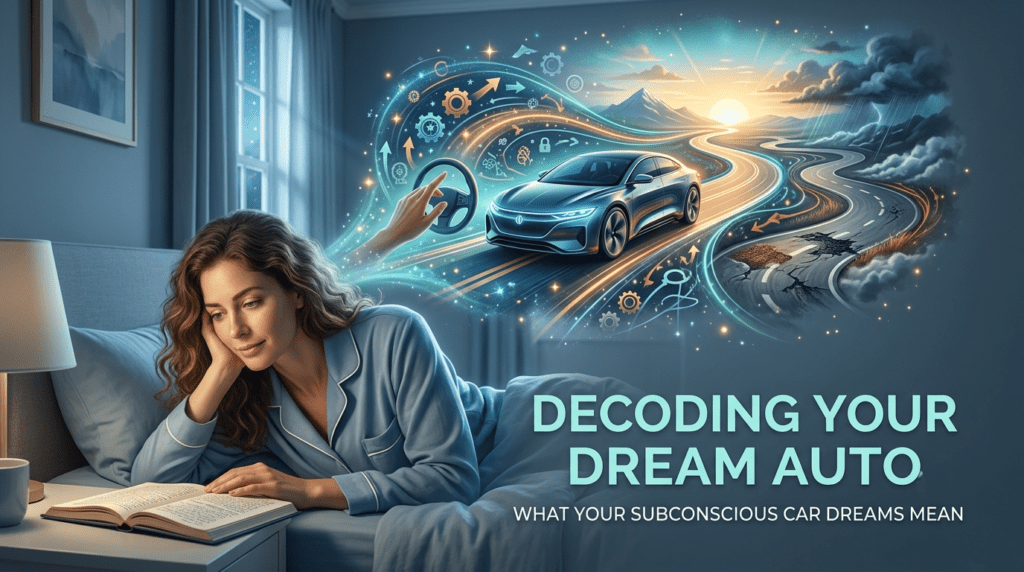
You slam your foot on the brake pedal, but it hits the floorboards with a sickening, hollow thud. The vehicle accelerates down a dark, winding road, its headlights cutting weakly through the heavy fog. Your heart hammers against your ribs as you grasp the cold reality: nobody is steering.
This terrifying scenario is one of the most common nighttime visions reported worldwide. When we unpack the psychology of a dream auto, we uncover a profound diagnostic tool of the human subconscious mind. Far from a random firing of neurons, your dreaming vehicle represents your physical body, your ego, and the exact way you are navigating the highway of your waking life.
Understanding these nocturnal journeys isn’t just about satisfying curiosity; it is a vital practice for holistic well-being. By learning to decode the messages your mind sends while you sleep, you can identify hidden anxieties, reclaim your personal agency, and make more aligned choices when you are awake.
The Car as a Mirror: Why Your Mind Chooses the “Dream Auto” Metaphor
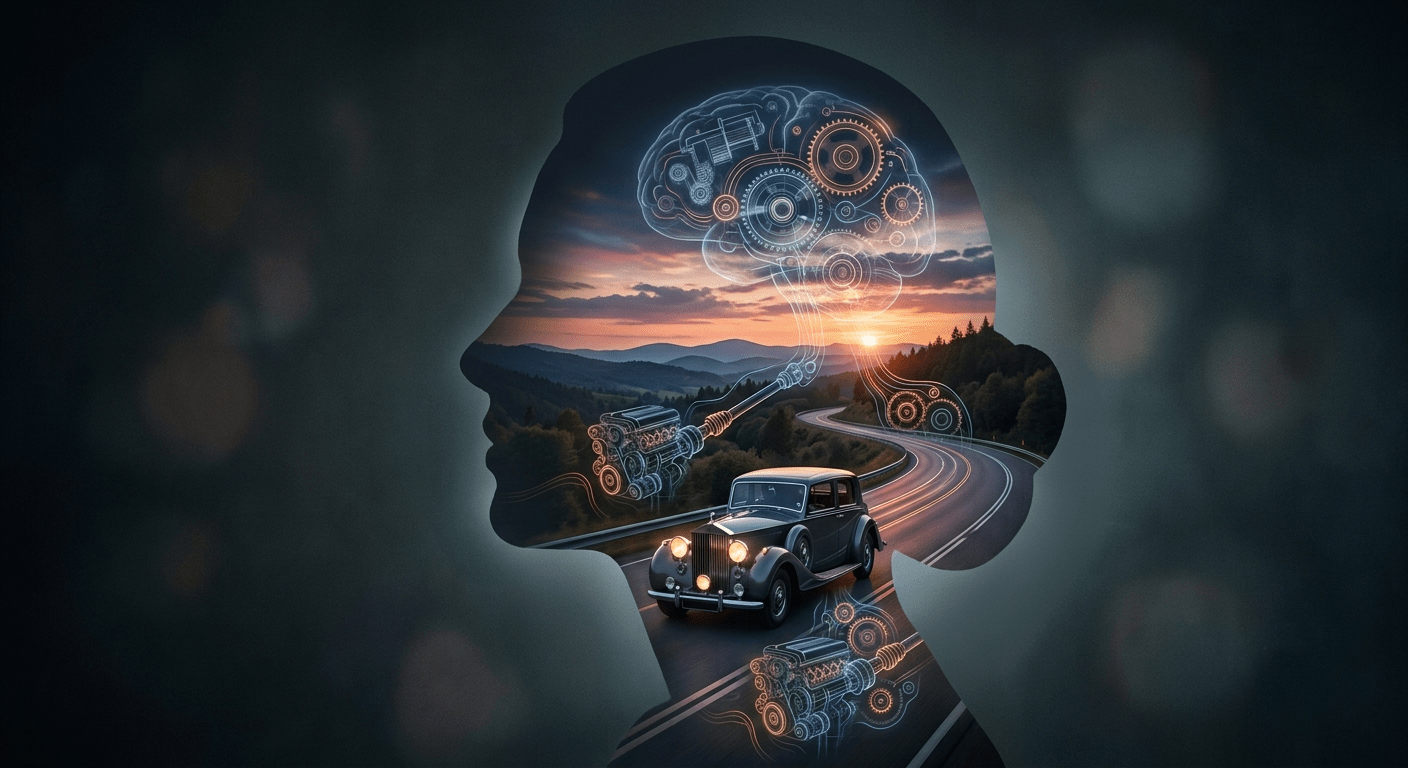
To understand why our brains are so obsessed with automotive dreams, we have to look at how humans interact with technology. For over a century, the automobile has been our primary symbol of freedom, status, and self-determination. It is our “second skin.” When you step inside a car, you gain the power to move faster than human legs ever could, but you also take on the responsibility of controlling a heavy, potentially dangerous machine.
In the realm of dream analysis, your subconscious uses the car as a direct metaphor for your life path. How the vehicle moves—and how you handle it—reflects how you are handling your daily existence.
                  ┌────────────────────────┐
                  │   THE DREAM VEHICLE    │
                  │ (Your Body, Ego & Self)│
                  └───────────┬────────────┘
                              │
         ┌────────────────────┼────────────────────┐
         ▼                    ▼                    ▼
┌──────────────────┐ ┌──────────────────┐ ┌──────────────────┐
│ THE ENGINE       │ │ THE STEERING     │ │ THE ROADWAY      │
│ (Your energy,    │ │ (Your control,   │ │ (Your current    │
│ drive & health)  │ │ choice & agency) │ │ life transition) │
└──────────────────┘ └──────────────────┘ └──────────────────┘
The Psychology of Motion and Life Transitions
Neurologically, dreaming occurs primarily during the Rapid Eye Movement (REM) stage of sleep. During REM, your brain’s emotional center—the amygdala—is highly active, while the logical prefrontal cortex is quieted. This creates a highly visual, metaphorical landscape.
When you are going through a major transition (like changing careers, ending a relationship, or moving to a new city), your brain needs a way to process the feeling of “movement.” The subconscious instantly reaches for the most relatable tool in its database: a car in motion. If you feel confident about the transition, the drive is smooth. If you feel overwhelmed, the car may spin out of control.
The Jungian Perspective: The Vehicle as the Persona
The legendary psychiatrist Carl Jung introduced the concept of the Persona—the mask or social armor we wear to present ourselves to the outside world.
In a modern psychological context, your dream vehicle is a vivid representation of your Persona.
-
A high-end, pristine sports car might indicate that you are highly focused on external validation, career status, and how others perceive your success.
-
A battered, sputtering sedan might suggest that you feel exhausted, undervalued, or that your physical body (your biological “engine”) is running on empty.
The Freudian Angle: Drive, Autonomy, and Control
Sigmund Freud viewed dreams as a space for wish fulfillment and the expression of repressed desires. From a Freudian perspective, driving a powerful vehicle represents our fundamental desire for autonomy and control over our own destiny.
If you are someone who constantly people-pleases or feels micromanaged in your waking life, taking the wheel of a roaring, high-horsepower engine in a dream is your mind’s way of reclaiming its power, releasing suppressed frustration, and asserting its primal drive to lead.
Who is Behind the Wheel? Common Scenarios & Meanings
When analyzing your sleep patterns, the specific details of the drive offer incredibly precise clues about your mental health. Below is a comprehensive diagnostic matrix designed to help you quickly identify the root cause of your car dreams.
| Dream Scenario | Primary Subconscious Trigger | What It Says About Your Waking Life |
| Driving with No Brakes | Burnout or chronic stress | You are moving too fast in life; your boundaries are failing, and you desperately need rest. |
| Riding in the Backseat | Loss of agency or passive living | You are letting someone else (a partner, boss, or parent) make your life choices for you. |
| A Violent Car Crash | Hidden conflicts or fear of failure | An impending clash between your goals and reality; a warning that your current habits are unsustainable. |
| Cruising in a Brand New Auto | High confidence or fresh starts | A highly positive symbol of alignment, exciting career pivots, or rising self-esteem. |
| Getting Lost or Stuck | Lack of direction or self-doubt | You are unsure of your long-term goals and feel paralyzed by choices. |
Deep-Dive: Driving From the Backseat
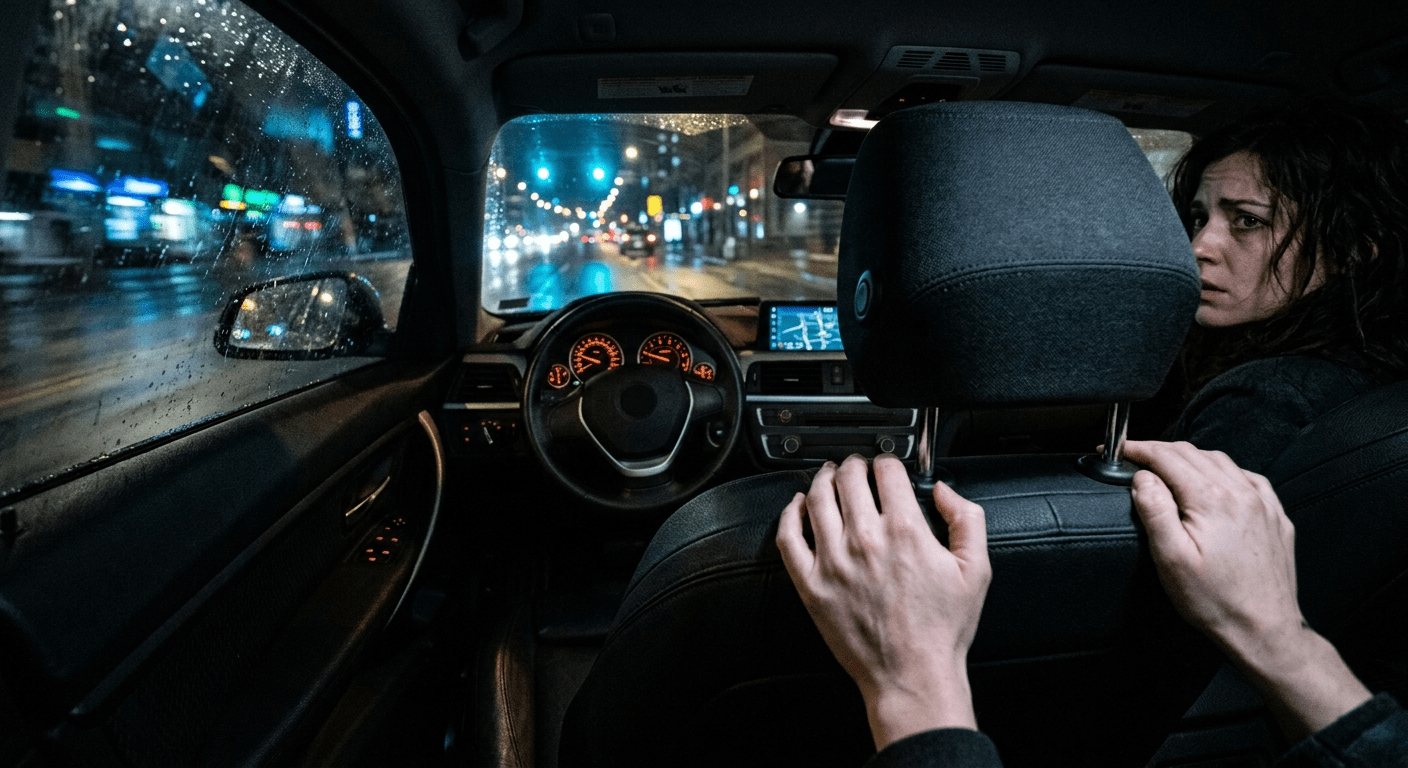
One of the most psychologically frustrating dreams is finding yourself inside a moving vehicle, only to realize you are sitting in the backseat while the driver’s seat is empty—or occupied by someone you know.
Subconscious Insight: This is a classic “loss of control” dream. If a boss or partner is driving, your subconscious is waving a red flag, suggesting that you have surrendered your personal boundaries. You are letting someone else steer your career, finances, or emotional well-being. If the driver’s seat is completely empty, it indicates a profound feeling of helplessness, as if your life is moving forward on autopilot without your conscious consent.
Deep-Dive: Sudden Brake Failure
You press down on the brakes, but the car continues to glide forward. This dream usually evokes panic, and you often wake up just before impact.
Subconscious Insight: Brake failure represents an inability to slow down or stop a particular behavior in waking life. It is the quintessential “burnout” dream. Your mind is telling you that you are taking on too many responsibilities, saying “yes” to too many obligations, and heading toward physical or emotional exhaustion. Your nervous system is stuck in fight-or-flight mode, and your brain is desperately trying to find the “stop” button.
Step-by-Step Guide: How to Analyze Your Dream Auto
Dream analysis is an active, therapeutic process. To move from passive dreaming to self-mastery, you need a reliable method to decode the symbols your mind presents to you.
Use this step-by-step framework to process your nighttime drives:
Step 1: Document the Mechanics and Condition of the Car
The moment you wake up, before looking at your phone or checking your emails, jot down the physical appearance of the vehicle.
-
Was it a vintage car from your childhood? This points to past memories, old habits, or unresolved childhood dynamics.
-
Was it a futuristic electric vehicle? This indicates forward-thinking, adaptability, and preparing for future challenges.
-
Was the car damaged, low on fuel, or missing a wheel? This is a somatic check-in. Your brain is signaling that your physical body is depleted and needs immediate self-care.
Step 2: Map the Seating Dynamics
Look at who was in the vehicle with you.
-
If you were alone: You are currently processing an internal journey that you feel you must face without external help.
-
If friends, family, or coworkers were passengers: Consider your waking relationship with them. Do you feel responsible for their happiness? Are you “carrying” them through a difficult time?
-
If an unknown, shadowy figure was driving: This represents an unacknowledged part of your own psyche—often your shadow self, containing repressed fears or unexpressed ambitions that are currently steering your choices.
Step 3: Identify the Emotional Undercurrent
Two people can have the exact same dream of driving fast on a highway, but one feels exhilarated while the other feels terrified. The visual image is only half the story; the emotional tone is the key to the lock.
-
Exhilaration/Joy: You are in alignment with your path. You trust your capabilities, even if the road ahead is fast-paced or unpredictable.
-
Panic/Anxiety: You are forcing yourself into situations for which you feel emotionally unprepared. Your subconscious is warning you to slow down and rebuild your foundation.
Step 4: Examine the Roadway and Environment
The terrain you drive on represents the current state of your life’s journey.
-
A smooth, sunny highway: A clear path ahead with minimal resistance.
-
A foggy, winding mountain pass: You are navigating complex, high-stakes decisions with limited visibility. You need to gather more information before making your next move.
-
An endless traffic jam: You feel stymied by external rules, bureaucracy, or delays, causing deep frustration in your waking goals.
The Sleep Science Aspect: When Nightmares Signal Waking Burnout
While ancient cultures viewed dreams as prophetic warnings, modern neuroscience reveals a far more fascinating truth. Your brain is not just a passive receiver of nighttime imagery; it is an active laboratory processing the physical and emotional residue of your day.
When your night is dominated by chaotic dreams of a failing dream auto, it is often a physiological distress signal from your nervous system.
                    ┌──────────────────────────┐
                    │  WAKING STATE: STRESS &  │
                    │      HIGH CORTISOL       │
                    └─────────────┬────────────┘
                                  ▼
                    ┌──────────────────────────┐
                    │    REM SLEEP TRIGGER:    │
                    │ Amygdala Hyperactivity   │
                    └─────────────┬────────────┘
                                  ▼
                    ┌──────────────────────────┐
                    │   NIGHTTIME METAPHOR:    │
                    │ Brakes Fail / Car Spins  │
                    └──────────────────────────┘
The REM Threat Rehearsal Theory
In evolutionary psychology, one of the leading explanations for nightmares is the Threat Rehearsal Theory. This theory suggests that during REM (Rapid Eye Movement) sleep, the brain simulates dangerous scenarios to prepare us for real-world threats.
In the modern world, we rarely face predators like saber-toothed tigers. Instead, our modern threats are deadlines, relationship conflicts, financial pressures, and existential transitions. Because your brain processes these social and emotional challenges using the same biological stress pathways as physical danger, it translates your waking anxiety into a physical emergency.
Screeching tires, a failing steering wheel, or plummeting off a bridge in a dream car are highly effective metaphorical “threats” your brain constructs to practice navigating high-stress, low-control situations.
The Cortisol and Adrenaline Connection
Your sleep architecture is highly sensitive to your waking hormonal balance. When you experience chronic stress, your adrenal glands release excess cortisol and adrenaline. Under ideal circumstances, these hormones should drop significantly as you transition into deep sleep.
However, if you go to bed immediately after checking work emails, watching a high-stimulus show, or engaging in stressful thoughts, your nervous system remains trapped in a sympathetic (fight-or-flight) state.
During the REM stage, this chemical imbalance causes your amygdala to fire intensely. Your sleeping brain registers this physical spike in heart rate and shallow breathing, frantically searching for a visual scenario to match the physical sensation of panic. The result? A terrifying ride in a runaway vehicle.
Holistic Interventions: Calming Your Mind Before the Ignition
If recurring vehicle nightmares are disrupting your sleep quality, the solution lies in down-regulating your nervous system before your head hits the pillow. You can transition your brain from a state of emergency to a state of calm using several targeted habits:
-
The “Brain Dump” Journaling Method: Before bed, spend five minutes writing down every task, worry, or unfinished project on a piece of paper. This physical act signal to your brain that these thoughts are safely stored outside your mind, reducing the need to “rehearse” them during the night.
-
Progressive Muscle Relaxation (PMR): Tense and release each muscle group, starting from your toes and working up to your forehead. This somatic practice physically releases trapped stress, shifting your body into a parasympathetic (rest-and-digest) state.
-
A “Digital Sunset”: Disconnect from all screens at least 60 minutes before sleep. Blue light suppresses melatonin production, while the constant flow of information keeps your cognitive engine running at high RPMs when it needs to be idling.
Skyscraper Add-On: Specialized “Dream Auto” Symbols
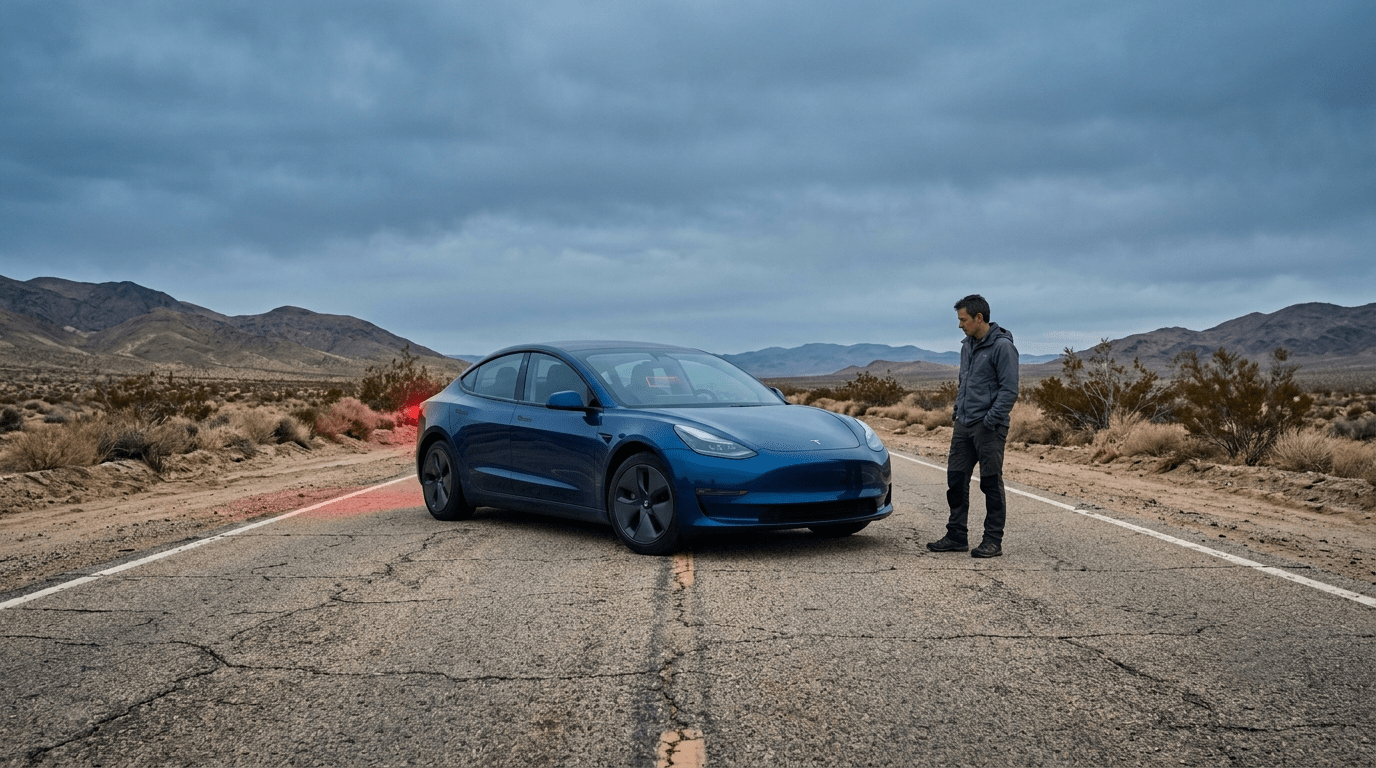
As technology and society evolve, our dream vocabulary changes. Modern dreamers do not just dream of standard sedans; they experience highly specific automotive scenarios that carry unique, contemporary psychological meanings.
Electric and Autonomous Vehicles (EVs)
What does it mean when you dream of a self-driving car or a sleek electric vehicle?
-
Autopilot Failures: Dreaming that you are a passenger in a self-driving car that suddenly malfunctions or drives toward a cliff reflects a deep anxiety about relying too heavily on technology, systems, or other people to run your life. It suggests you feel detached from your own decision-making process and are letting automated habits guide you.
-
A Dead Battery: Unlike a car running out of gas, a dead EV battery suggests a systemic, deep-level energy depletion. This is a common symbol for creative burnout, indicating that you have pushed past your emotional reserves and need a complete recharge, rather than just a quick temporary fix.
Public Transit: Buses, Trains, and Subways
If you find yourself on public transit rather than in a personal vehicle, the dream shifts from individual agency to collective movement.
-
Buses and Trains: Because these vehicles run on fixed tracks or predetermined routes, dreaming of riding them suggests you feel bound by social conformity or family expectations. You may feel like you are traveling on a track that someone else laid down for you, sacrifice your individuality to stay on a predictable path.
-
Missing Your Stop: This represents a profound fear of missing out on life opportunities (such as career milestones, marriage, or personal growth) due to hesitation or letting external schedules dictate your timing.
Color Psychology of the Vehicle
The hue of your dream car acts as an emotional filter, adding a layer of nuance to how you feel about your life journey.
Red: Associated with passion, drive, aggression, or a warning. A red car can indicate high motivation, but it can also warn of a volatile temper or rushing headfirst into a dangerous situation.
White: Typically represents a fresh start, clarity, or simplicity. However, if the car feels clinical or sterile, it may indicate a feeling of emotional numbness or a desire to wipe away your personal history.
Black: Symbols of mystery, power, elegance, or the unacknowledged “shadow” self. Driving a black car suggests you are comfortable navigating life’s mysteries, or alternatively, that you are concealing your true motives from others.
Blue: Closely tied to intellect, calm, and communication. A blue vehicle often indicates that you are approaching your current life decisions with a steady, rational mind.
Frequently Asked Questions (FAQ)
Why do I keep having a recurring dream that I can’t find my parked car?
This is a highly common dream symbol representing a lost sense of identity or direction. The parked car is your personal vehicle of expression; losing it suggests that in your waking life, you feel disconnected from your purpose, unable to access your personal power, or unsure of what your next step should be. It is an invitation to stop looking for external direction and reconnect with what truly drives you.
What does it mean if I’m driving from the backseat in a dream?
Driving from the backseat represents a paradox: you are trying to control your life, but you refuse to take full, visible responsibility for your actions. It is a common dream for individuals experiencing imposter syndrome, or those who try to manage family or work situations from behind the scenes rather than stepping into an authentic leadership role.
Does dreaming about a car crash mean I am going to get into a real accident?
No. Dreams are symbolic, not premonitory. A car crash in a dream is almost always a metaphorical warning about your emotional pace and internal stress. It signifies that your current lifestyle, working habits, or relationship dynamics are heading toward a collision point unless you make a conscious effort to slow down, pivot, or seek support.
What if I dream of driving a car but I don’t know how to drive in real life?
This is a very positive sign of psychological growth. It indicates that you are taking on new responsibilities, stepping into uncharted territory, and trusting yourself to navigate complex situations in waking life—even if you feel inexperienced or lack formal preparation.
Conclusion: Taking Back the Wheel
Every dream auto that cruises, stalls, or races through your mind at night is a highly personalized progress report from your subconscious. Your sleeping mind does not want to terrify you; it wants to wake you up to the realities of your waking life.
┌────────────────────────────────────────────────────────┐
│               YOUR SUBSTANTIVE TAKEAWAY                │
├────────────────────────────────────────────────────────┤
│ • If your brakes fail ───> Slow down and set boundaries│
│ • If you are in the back ─> Step forward and take control│
│ • If the road is foggy ──> Seek clarity before moving  │
│ • If the car is damaged ─> Prioritize physical self-care│
└────────────────────────────────────────────────────────┘
By learning to pay attention to these nightly journeys, you can transform confusing, chaotic nightmares into actionable strategies for self-care, mindfulness, and personal growth. The next time you find yourself behind the wheel in your sleep, remember: your mind is showing you exactly how to navigate the road ahead. Listen to its engine, check your dashboard, and when you wake up, take back the wheel with confidence.