Imagine staring at your screen, the blur of endless notifications and looming deadlines merging into a persistent, exhausting fog. Your sleep is chronically fragmented, your focus is shattered, and your nervous system feels perpetually locked in “fight or flight” mode. This is modern burnout—a state where simply taking a weekend off or trying a new meditation app is no longer enough to reset your baseline.
Sometimes, achieving true holistic healing requires a radical shift in your physical environment. This is exactly why Phuket happiness trips Turtle Village have emerged as the ultimate mindful retreat for those seeking profound cognitive and physical rest. While the broader island is often associated with bustling tourism, the secluded Turtle Village enclave in Northern Phuket offers a vastly different experience: a tranquil sanctuary explicitly designed for slow living, nervous system regulation, and deep recovery.
In this comprehensive guide, we will explore the mechanics of how this specific environment heals the mind, promotes restorative sleep, and helps you cultivate lasting, sustainable joy.
The Anatomy of Burnout (And Why You Can’t Meditate Your Way Out of a Toxic Environment)

To understand why a specialized retreat is necessary, we must first look at the cognitive and physiological reality of chronic stress. Achieving a calm brain isn’t just about willpower; it is about biology.
The Science of Chronic Stress and Time Perception
When you are burned out, your adrenal glands pump a continuous stream of cortisol and adrenaline into your bloodstream. Over time, this chemical flood fundamentally alters brain mechanics. The amygdala (the brain’s fear center) becomes hyperactive, while the prefrontal cortex (responsible for logical thinking and emotional regulation) weakens.
Furthermore, chronic stress distorts our perception of time. Days feel like a blur of urgency, yet memory formation is stunted. This heightened state of arousal wreaks havoc on your circadian rhythm, blocking the critical REM and deep sleep cycles necessary for cellular repair and dream regulation. If you were to plug your data into a sleep tracking calculator during a period of severe burnout, the lack of restorative deep sleep would be glaringly evident.
Why “Location Therapy” Works
Environmental psychology shows us that our surroundings dictate our internal state. You cannot effectively heal in the same environment that made you sick.
Stepping into a nature-rich, culturally grounded setting interrupts the brain’s default stress loops. The novel stimuli of a serene environment—the sound of waves, the smell of sea salt, the absence of urban urgency—force the nervous system to recalibrate. This physical distance from your daily triggers creates the necessary psychological safety required for deep meditation and authentic holistic recovery.
Expert Insight: “Recovery from severe burnout requires more than just the cessation of work; it demands the introduction of restorative environments. Nature, silence, and novel sensory experiences stimulate neuroplasticity, allowing the brain to rewire itself for peace rather than panic.”
Discovering Turtle Village: A Sanctuary for the Soul
When most people think of a trip to Thailand, they picture the crowded streets of Patong or the hyper-energetic beach clubs. Turtle Village is the antithesis of this chaos.
What and Where is Turtle Village?
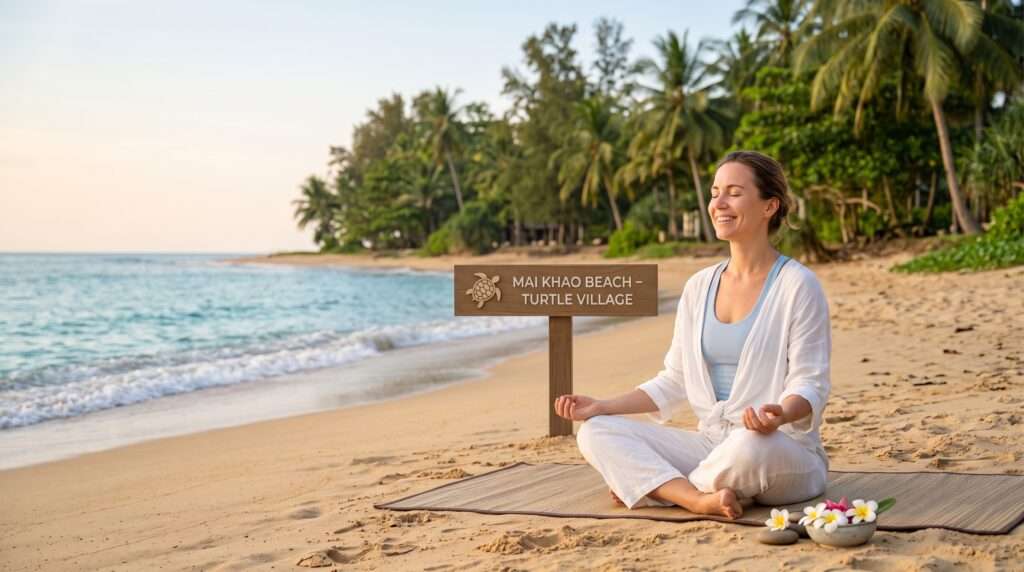
Nestled in the lush, tropical tranquility of Mai Khao Beach in Northern Phuket, Turtle Village is a boutique, open-air lifestyle and retail complex. However, its true value lies not just in the village itself, but in the micro-environment it anchors.
Bordered by the protected Sirinat National Park to the north and miles of pristine, untouched coastline to the west, the area is defined by its sweeping mangrove forests, gentle ocean breezes, and a distinct lack of commercial noise. It is an area where the pace of life slows down to a deeply human rhythm.
The “Happiness Trip” Philosophy
The concept of a “happiness trip” flips traditional travel on its head. Conventional vacations are often exhausting, packed with rigid itineraries, fear of missing out (FOMO), and the pressure to document every moment.
The 4 Pillars of Healing at Turtle Village
To understand why this specific location is so transformative, we must break down its elements. Healing a burned-out brain requires a multi-sensory approach. Here are the four foundational pillars that make the Turtle Village area an elite destination for holistic well-being.
Pillar 1: Mindful Movement and Pristine Nature

The foundation of any happiness trip is a deep, uninterrupted connection with the natural world. Mai Khao offers an 11-kilometer stretch of virtually untouched, golden-white sand. This expansive environment is perfect for earthing (or grounding)—the practice of walking barefoot on natural surfaces to allow the earth’s electrons to balance the body’s electrical charge.
From a neuroscientific perspective, physical grounding combined with the repetitive, mindful movement of walking stimulates the vagus nerve, signaling the parasympathetic nervous system to calm the brain. Wandering through the nearby Sirinat National Park’s mangrove trails or silently watching the protected sea turtles nest offers a visual and physical grounding technique that actively lowers blood pressure, reduces anxiety, and restores cognitive clarity.
Pillar 2: Deep Sleep Restoration
For those struggling with insomnia, fragmented rest, or vivid, stress-induced dreams, environment is everything. The profound quiet of the Turtle Village enclave stands in stark contrast to the relentless hum of urban life.
Here, the primary soundscape is acoustic therapy provided by nature. The rhythmic crashing of the Andaman Sea acts as natural white noise, which has been shown to encourage brainwaves to sync into the slower theta and delta frequencies necessary for deep, restorative REM sleep. When you remove artificial light pollution and urban noise, your pineal gland can optimally produce melatonin. Over a few days, your circadian rhythm organically resets, allowing you to wake up naturally energized without the need for an alarm clock.
Pillar 3: Nourishing the Body and Mindful Eating
True holistic well-being recognizes the undeniable link between the gut and the brain. The gut microbiome directly influences mood, memory, and time perception, largely because it produces a vast majority of the body’s serotonin.
The culinary offerings around Turtle Village provide an effortless anti-inflammatory diet. Traditional Southern Thai cuisine relies heavily on neuro-protective spices like fresh turmeric, ginger, lemongrass, and galangal. When you sit at a quiet, open-air table—focusing on the complex flavors and chewing slowly—you are practicing mindful eating. This single-tasking approach to meals not only aids physical digestion but prevents the mental fatigue associated with eating while distracted by screens.
Pillar 4: Cultural Grounding and Mental Stillness
Holistic retreats are most effective when they offer a sense of perspective. Engaging with the local culture—whether it’s browsing handmade, artisanal crafts within Turtle Village, taking a quiet morning walk to the nearby Wat Mai Khao (a serene local temple), or experiencing traditional Thai massage—fosters profound spiritual connectedness.
Thai culture inherently values Sabai Sabai, a philosophy of relaxed, comfortable, and peaceful living. Surrounding yourself with individuals who embody this calm, present-moment awareness acts as a social mirror, gently reminding your own nervous system that it is safe to finally let go and simply be.
Designing Your Personal Mindful Retreat Itinerary
To ensure your journey to Northern Phuket actually serves as a nervous system reset, structure is necessary—but it must be a fluid, gentle structure. Here is an optimized, 3-day introductory blueprint for escaping burnout.

Day 1: Decompression and Digital Detox
-
Morning: Arrive and immediately switch your devices to airplane mode. Unpack slowly and intentionally.
-
Afternoon: Head straight to Mai Khao beach for an hour of barefoot grounding. Focus solely on the sensation of the sand and the rhythm of the waves.
-
Evening: Enjoy a light, easily digestible Thai dinner. Prioritize sleep hygiene by reading a physical book and aiming to be in bed by 9:00 PM to maximize the critical deep sleep window.
Day 2: Internal Healing
-
Morning: Start the day with sequential grounding breaths by the ocean. Visualize your breath as a continuous, calming loop, deliberately slowing your exhales to down-regulate your heart rate.
-
Afternoon: Visit a local spa near Turtle Village for traditional Thai massage. This therapeutic touch releases physical tension stored in the fascia and muscles. Follow this with mindful journaling at a quiet local café, documenting any shifts in your physical sensations or thoughts.
-
Evening: Practice a 20-minute guided meditation before sleep, focusing on releasing the residual mental static of your daily life.
Day 3: Joyful Exploration
-
Morning: Engage in light, joyful movement. Kayak through the serene coastal mangroves, observing the intricate root systems and local wildlife.
-
Afternoon: Wander through Turtle Village. Practice mindful shopping by appreciating the craftsmanship of local textiles and goods without the urge to rush.
-
Evening: Reflect on the trip with a sunset beach walk, practicing gratitude for the mental space you have created.
The Itinerary Shift: Burnout vs. Mindfulness
| Vacation Habit | The Burnout Approach (What to Avoid) | The Mindful Approach (Turtle Village Style) |
| Pacing | Rushing to see 5 landmarks in one day. | Exploring one natural location deeply and slowly. |
| Technology | Live-tweeting or vlogging every meal. | Leaving the phone in the room; eating mindfully. |
| Mindset | “I need to maximize every single minute.” | “I am allowing my body to dictate what it needs.” |
| Sleep | Staying up late, drinking alcohol, waking up exhausted. | Following the sun; embracing early, restorative rest. |
Bringing the “Phuket Happiness” Home

The true measure of a holistic retreat is not how you feel while you are there, but how you manage your energy once you return to your everyday environment. The goal of visiting a sanctuary like Turtle Village isn’t just temporary escapism; it is about establishing a new physiological baseline that you can maintain long after you’ve unpacked your bags.
Integrating Thai Mindfulness into Daily Life
One of the most powerful souvenirs you can bring back from Phuket is the cultural concept of Sabai Sabai. In the West, we often glorify the “hustle,” equating stress with productivity and self-worth. Sabai Sabai is the radical acceptance that ease, comfort, and relaxed living are not just acceptable, but necessary for a healthy existence.
You can integrate this philosophy at home by deliberately creating pockets of slow time. This might mean enjoying your morning coffee in complete silence without looking at your phone, or choosing to walk through a local park rather than rushing through traffic. It is the conscious decision to un-complicate your daily routines.
Protecting Your Peace
To maintain the cognitive clarity and regulated nervous system you cultivated on the beach, you must fiercely protect your newfound peace.
-
Anchor Your Breath: When you feel the familiar creep of burnout returning, use the grounding and breathing techniques you practiced by the Andaman Sea. If visualizing the ocean isn’t enough, following sequential, rhythmic breathing animations can act as an excellent anchor to quickly down-regulate your nervous system and guide your brain back to a state of calm.
-
Defend Your Sleep Hygiene: Protect the circadian rhythm you reset. Keep your bedroom as dark and quiet as the nights in Northern Phuket, and strictly limit blue light exposure at least an hour before bed to allow for natural melatonin production.
-
Curate Your Sensory Environment: You may not have access to a tropical mangrove forest, but you can still control your immediate surroundings. Introduce natural light, indoor plants, and acoustic therapy (like ocean soundscapes) into your workspace to prevent the amygdala from re-entering a state of hyper-arousal.
Frequently Asked Questions (FAQs)
To help you plan your journey, here are answers to the most common questions regarding mindful travel to this unique region of Thailand.
Is Turtle Village suitable for a solo healing or meditation journey? Absolutely. Because the Mai Khao area caters to a slower, more intentional pace of life, it is exceptionally safe and welcoming for solo travelers. The lack of aggressive nightlife makes it an ideal environment for uninterrupted introspection, solo journaling, and deep meditation.
How does Mai Khao Beach differ from the rest of Phuket? While Southern Phuket (areas like Patong or Kata) is famous for its vibrant nightlife, massive crowds, and dense commercialization, Mai Khao Beach is part of a protected national park. It remains one of the longest, quietest, and least developed stretches of sand on the island, offering unparalleled peace and privacy.
When is the best time of year to visit for a wellness and sleep retreat? If you prefer sunny, dry days for long beach walks, November through April is ideal. However, for a deeply introspective, quiet retreat, the “Green Season” (May through October) offers lush, vibrant landscapes, dramatic afternoon rainstorms perfect for cozying up with a book, and significantly fewer tourists—often making it easier to secure profound quiet.
Do I need to stay at a luxury resort to experience the wellness benefits? Not at all. While the area is home to renowned luxury wellness properties, the core healing elements of a Phuket happiness trip—the expansive ocean, the grounding sand, the quiet mangroves, and the mindful pace of Turtle Village itself—are completely free and accessible to everyone, regardless of budget.
Conclusion
Escaping burnout is rarely as simple as taking a long weekend and hoping for the best. When your nervous system is depleted and your brain feels constantly wired, you require an environment that actively participates in your healing.
A Phuket happiness trips Turtle Village itinerary provides exactly that. By offering a sanctuary of pristine nature, acoustic calm, nourishing food, and cultural groundedness, it allows your body to finally step out of survival mode and into a state of profound restoration. It is more than just a beautiful destination; it is a catalyst for cognitive reset, deep sleep, and the rediscovery of genuine joy.