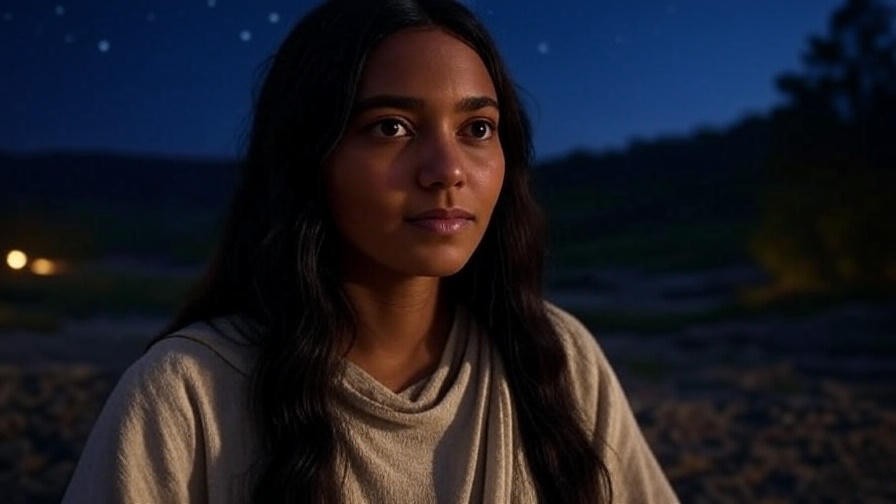
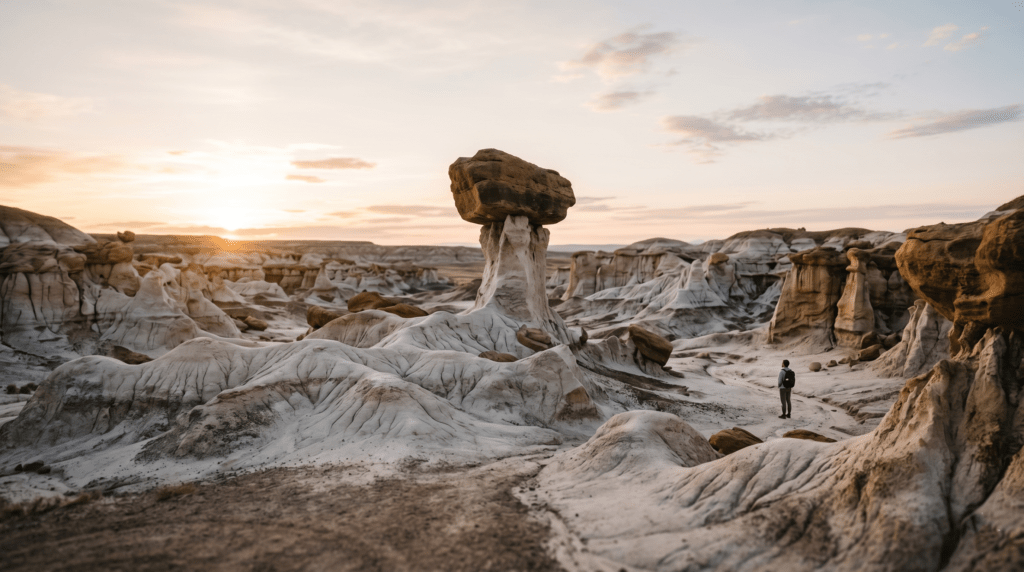
Imagine stepping out of your vehicle into a landscape that feels pulled directly from your subconscious. The remote New Mexico badlands defy logic, presenting a surreal canvas of fossilized wood, towering hoodoos, and alien rock formations that mimic the fluid, non-linear logic of a lucid dream. However, this profound sense of awe is often overshadowed by the stress of simply finding the location. The area is completely unmarked, making accurate valley of dreams trailhead photos an essential tool before you lose cell service and venture into the desert.
When you are constantly worried about getting lost, your brain is forced into a state of hyper-vigilance. The amygdala activates, flooding your system with cortisol. In this survival mode, it is biologically impossible to experience the meditative peace and holistic well-being that such a profound natural environment offers. The anxiety of navigation steals the joy of presence.
This comprehensive guide is designed to remove that anxiety. By providing you with exact GPS coordinates, step-by-step visual waypoints, and the mental framework needed for off-grid hiking, this article serves as your navigational anchor. When the fear of getting lost is removed, your mind is free to transition from stress to profound presence, allowing you to fully absorb the restorative power of this waking dreamscape.
Preparing the Mind and Body for the Badlands
Navigating an unmarked wilderness requires more than just a good pair of boots; it requires an intentional approach to both your physical safety and your mental state.
The Psychology of “Awe” and Landscape Therapy
In the study of holistic brain health, the psychological concept of “Awe” is a powerful therapeutic tool. Awe is defined as the emotional response to vast stimuli that transcend our current frames of reference. When you walk among the towering, ancient clay formations of the Valley of Dreams, your brain’s Default Mode Network (DMN)—the area responsible for rumination, ego, and everyday anxieties—quiets down.
Vast, silent landscapes act as a form of natural therapy, effectively hitting a reset button on mental fatigue. However, accessing this deeply meditative state requires a foundation of physical safety. You cannot experience therapeutic awe if your brain is panicked about finding the way back to your car.
Pre-Hike Mindfulness and Safety Protocol
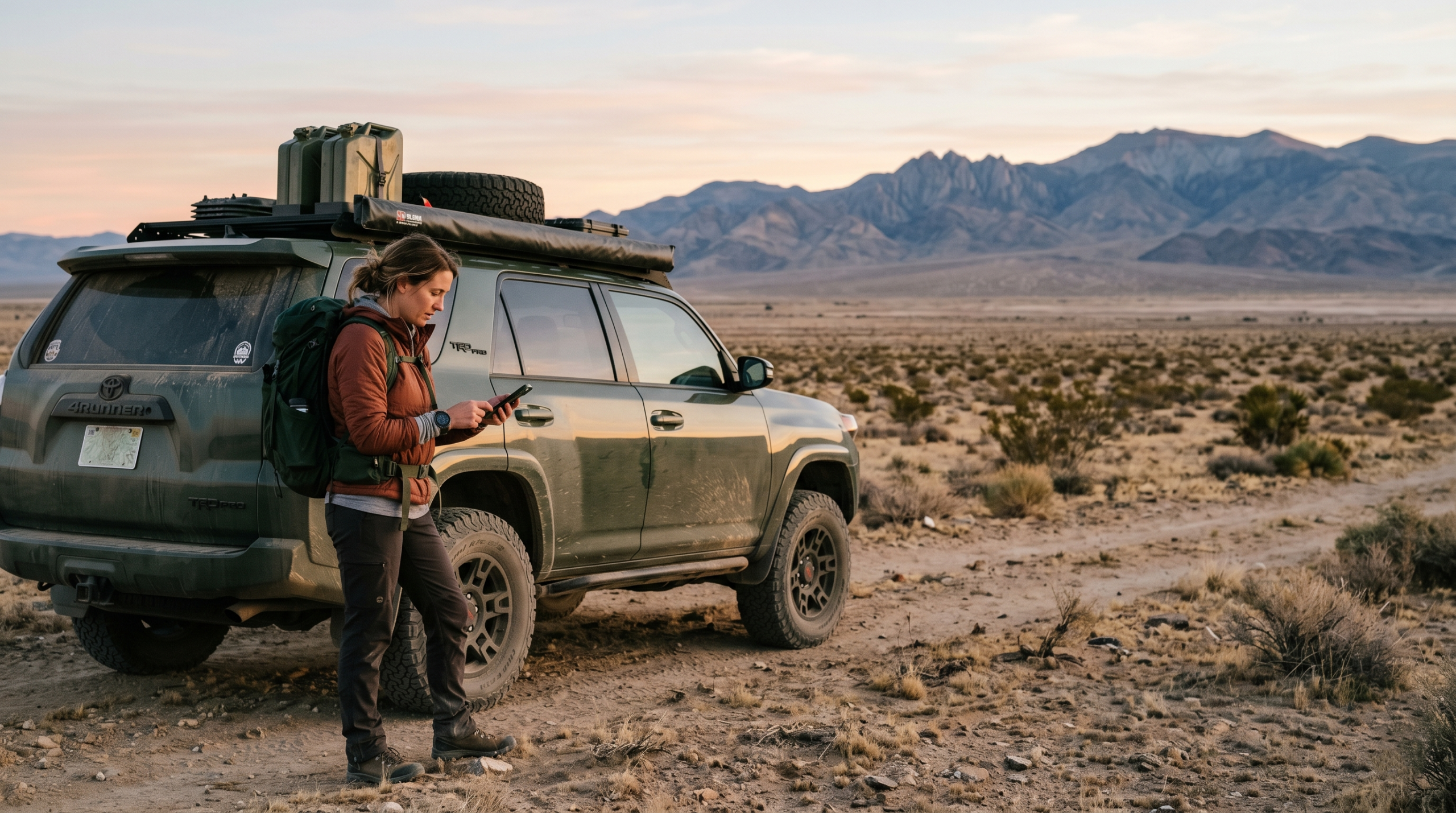
Physical Preparation (The Practicalities)
The high desert is unforgiving. Before you even turn your keys in the ignition, your physical preparation must be flawless to ensure a safe, mindful journey.
-
Offline Navigation is Mandatory: There is zero cellular service within a 30-mile radius of the badlands. You must download offline topographic maps using apps like AllTrails or Gaia GPS. Do not rely on Google Maps once you leave the paved highway.
-
Hydration and Sun Protection: The stark, white clay of the badlands acts like a reflector for the sun. There is absolutely no shade. Carry a minimum of one gallon of water per person, wear a wide-brimmed hat, and apply high-SPF sunscreen, even in the winter months.
-
Footwear: The terrain consists of loose dirt, crumbling clay, and hidden washes. Sturdy, closed-toe hiking boots with strong ankle support are non-negotiable.
Mental Preparation (The Intentions)
Once your gear is packed, prepare your mind. As you drive down the long, dusty washboard roads leading to the wilderness boundary, intentionally turn off your vehicle’s radio. Allow the silence of the desert to slowly permeate your awareness. Set an intention for the hike: perhaps it is to observe the organic shapes without judgment, to focus on the rhythm of your breath as you walk, or simply to disconnect from the digital noise of modern life.
The Drive In: Getting to the Remote Trailhead
The Valley of Dreams is situated near the Ah-Shi-Sle-Pah Wilderness and the Bisti/De-Na-Zin Wilderness in San Juan County, New Mexico. Getting there is an adventure in itself, requiring navigation through a maze of Bureau of Land Management (BLM) dirt roads.
Navigating the Unmarked Roads
From Highway 550 (south of Farmington and north of Cuba), you will turn west onto County Road 7170. This road is typically a mix of gravel and dirt.
-
Crucial Warning: Do not attempt this drive during or immediately after heavy rain. The dirt roads contain bentonite clay, which transforms into an impassable, slippery grease when wet. Even four-wheel-drive vehicles will become hopelessly stuck.
Follow CR 7170 for roughly 11.5 miles. You will pass various oil and gas utility roads; stick to the main graded path. You will eventually turn right onto CR 7010. The landscape will begin to look increasingly barren, with subtle hints of the vibrant badlands peeking over the horizon.
Locating the Parking Area
Because there is no official, paved parking lot, the “trailhead” is simply a wide dirt pull-off on the side of the road.
-
Exact Parking GPS Coordinates: 36.1436° N, 107.9758° W
When you arrive at these coordinates, you will see an unmarked dirt area large enough for a handful of vehicles. There are no signs, no restrooms, and no kiosks. Before taking a single step away from your vehicle, open your offline GPS app and drop a digital pin on your car’s exact location. This simple, five-second action is your ultimate insurance policy for a calm, stress-free return journey.
The Vital Valley of Dreams Trailhead Photos
When you leave your vehicle, your offline map will show you as a blue dot in a sea of topographical lines. Because there is no official trailhead sign, kiosk, or paved path leading the way, visual landmarks become your primary mode of navigation. Knowing exactly what to look for is the key to maintaining a calm, grounded state of mind.
Visual Cues for the Unmarked Hike
The hike from the parking area to the edge of the badlands is approximately 1.5 to 2 miles across relatively flat, featureless scrubland. Without visual anchors, it is incredibly easy to veer off course. Your downloaded GPS track is your primary guide, but confirming your path with the following visual milestones ensures you are walking with confidence rather than doubt.
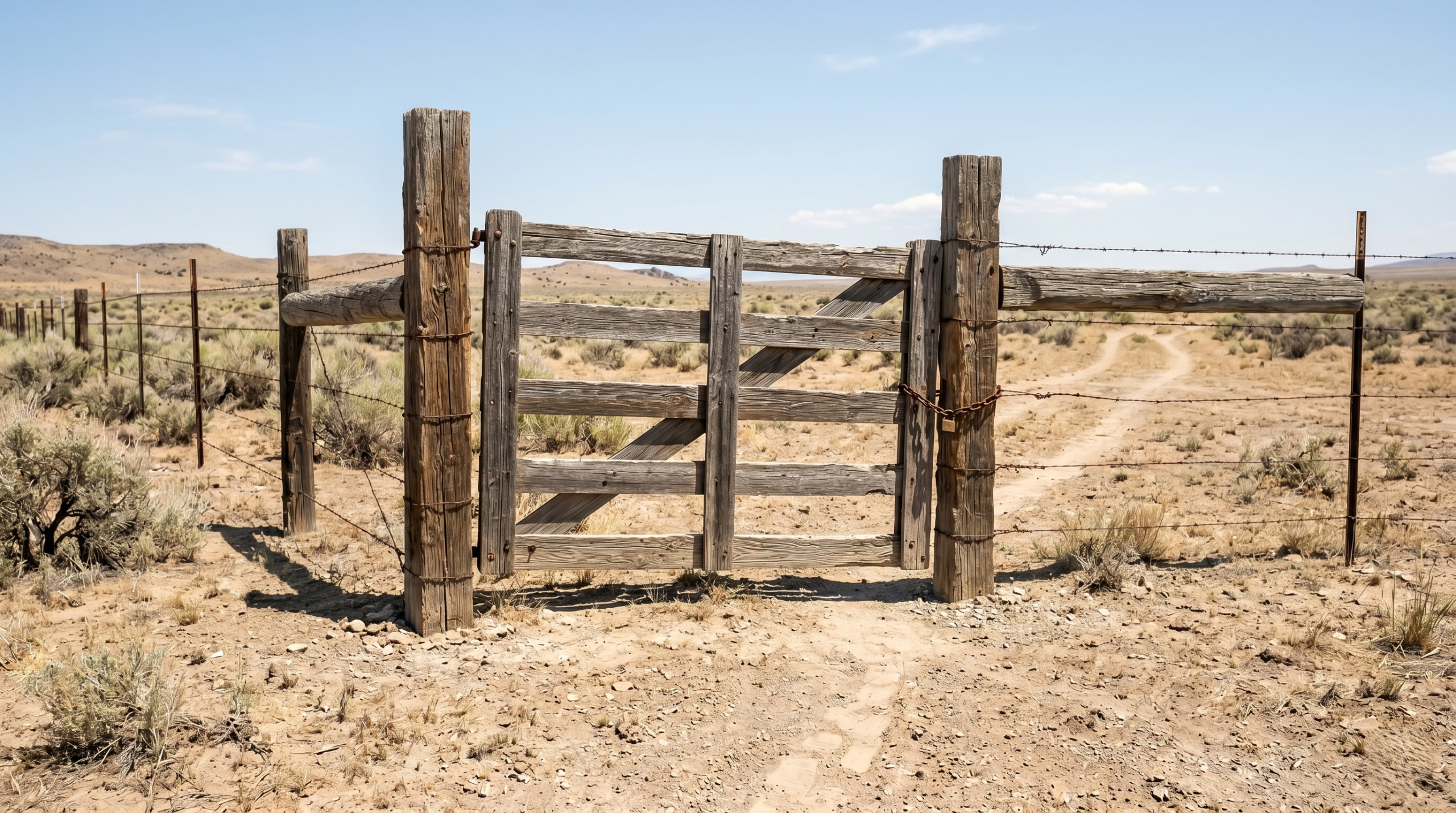
Landmark 1: The Barbed Wire Fence and Gate
After walking south from your vehicle for about half a mile, your first major visual cue will appear. You will encounter a standard BLM barbed wire fence line intersecting your path.
(Placeholder for Image 2: A clear, eye-level photo of the wooden H-brace gate along the barbed wire fence. The image should show the latch mechanism and the faint, dusty footprint trail leading up to and through the gate).
Do not try to cross the barbed wire where it is tight or damaged. Look for the designated, albeit rustic, wire gate. Crucial E-E-A-T Note: Following the rules of the backcountry is paramount. If the gate is closed when you arrive, you must close and latch it securely after you pass through. If it is open, leave it open. This section of land is often leased for open-range cattle grazing, and respecting these boundaries is a fundamental part of outdoor stewardship.
Landmark 2: The Initial Wash (Arroyo) Crossing
Continuing south, the landscape remains deceptively flat. The sagebrush and sparse desert grasses offer little variation. About a mile into the hike, you will encounter your second major visual milestone: a wide, shallow wash, also known as an arroyo.
(Placeholder for Image 3: A photograph looking down into the sandy, dry riverbed of the wash, showing the slight drop in elevation and the continuation of the faint foot trail up the opposite bank).
Depending on recent rainfall, this wash may be completely dry and sandy, or slightly muddy. You will need to drop down into the wash, walk across the sandy bottom, and climb up the slight incline on the opposite side. Crossing this arroyo is a good indicator that you are on the right trajectory. Treat this crossing as a mindfulness bell—a moment to check your breathing, hydrate, and re-center your focus on the present environment.
Landmark 3: The Rim Overlook
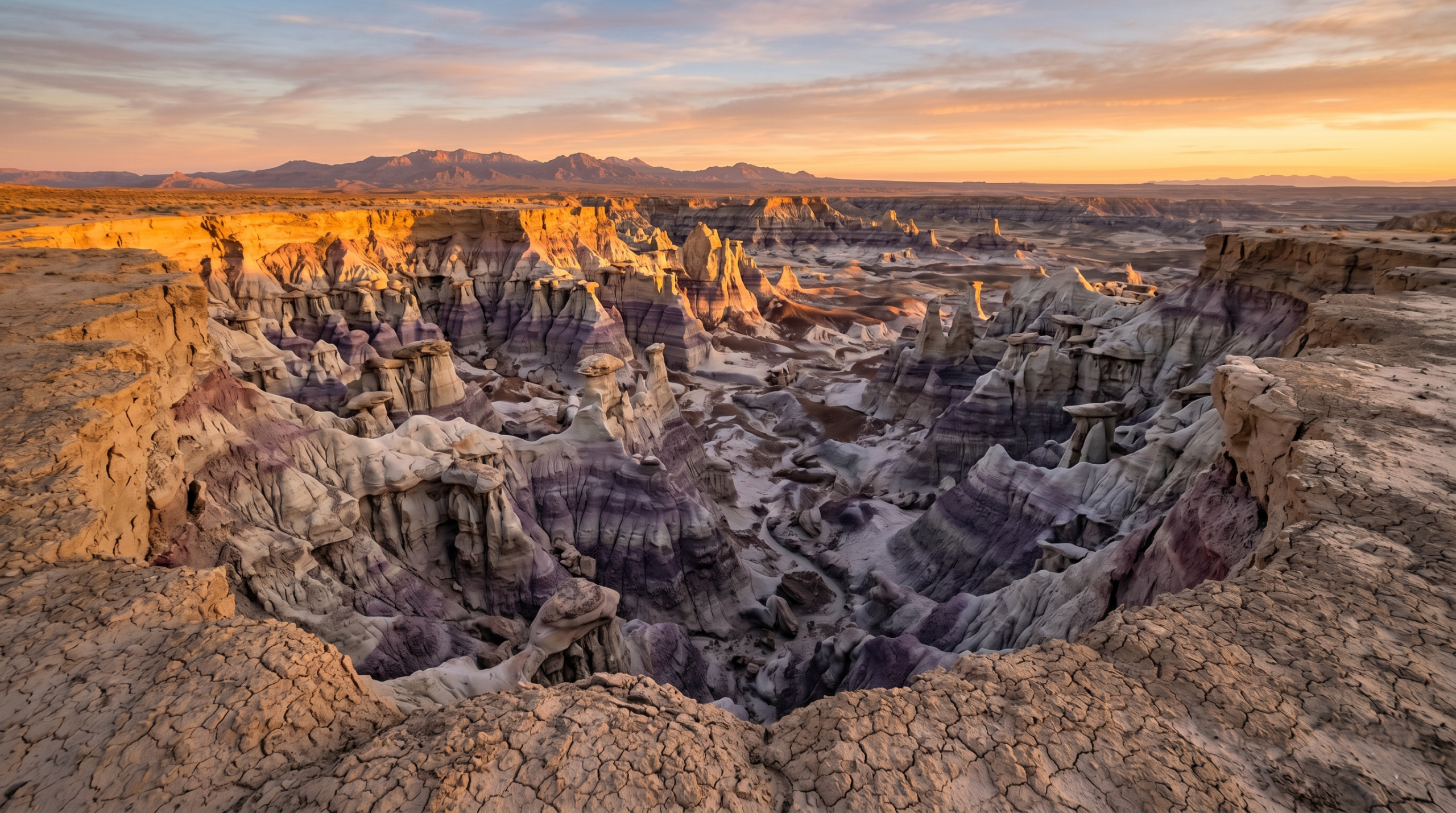
The most disorienting part of the hike is that the Valley of Dreams is entirely hidden from view until you are right on top of it. You are essentially walking on a plateau above the valley floor. Your final visual cue before entering the badlands is the rim overlook.
(Placeholder for Image 4: A breathtaking, wide-angle shot taken from the edge of the plateau, looking down into the sudden, sprawling bowl of white, gray, and purple clay hoodoos that make up the Valley of Dreams).
Suddenly, the flat scrubland falls away, revealing a sprawling basin of alien rock formations. This is the moment the landscape truly shifts. Pause at the rim. Take a deep breath and observe the sprawling, maze-like layout below. From here, you can mentally map out your descent into the valley floor.
A Meditative Walk Among the Hoodoos
Once you drop down from the rim and enter the valley floor, the true magic of the badlands begins. You are no longer just hiking; you are exploring a geological gallery.
Navigating the Valley Floor
There is no designated trail winding through the hoodoos. The floor of the valley is a mix of hardened clay and loose sand. You are free to wander, but keeping a close eye on your GPS app is vital, as the towering formations can easily obstruct your view of the rim, making it easy to get turned around.
The most famous formation in this area is the “Alien Throne,” a delicate, gravity-defying capstone perched atop a slender pillar of clay. Along the way, you will also pass massive logs of petrified wood, fossilized millions of years ago, lying partially exposed in the dirt.
The “Dream State” Experience
There is a profound connection between the visual input of this landscape and the way our brains process reality. Walking through the Valley of Dreams feels remarkably like navigating a REM sleep cycle. The organic, twisted shapes of the rock formations challenge our everyday perception, encouraging the brain to engage in pareidolia—the psychological phenomenon where we see familiar patterns or faces in random objects.
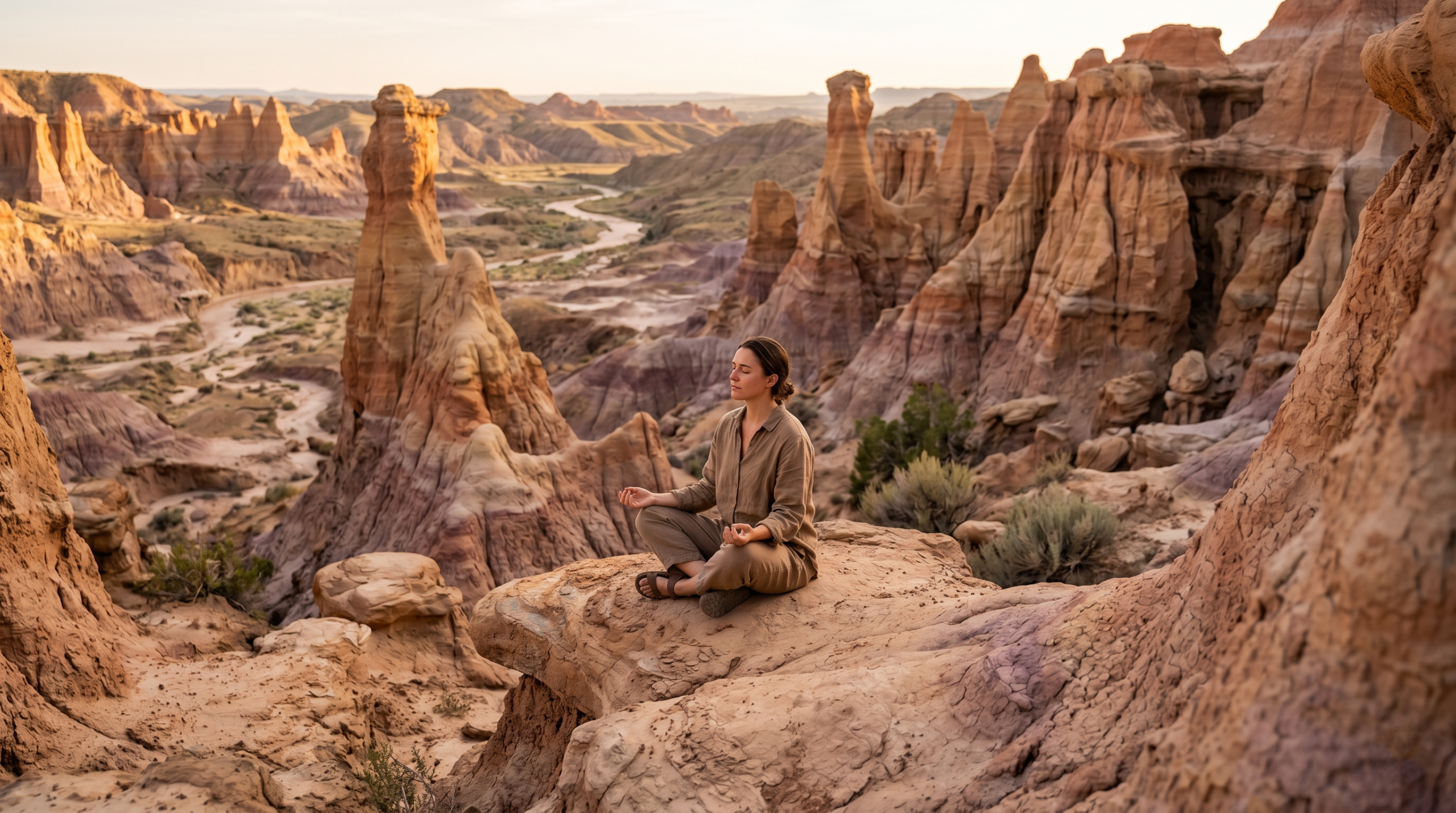
Just as decoding a dream meaning requires us to look beyond literal interpretations, experiencing this landscape requires us to let go of our rigid, everyday logic.
To fully embrace this holistic habit of presence:
-
Find a quiet space: Choose an area away from the main cluster of formations.
-
Sit down: Rest on a piece of solid ground (avoid sitting on fragile clay).
-
Engage your senses: Close your eyes and listen to the profound, ringing silence of the desert. Feel the dry heat of the sun.
-
Breathe: Spend ten minutes doing a simple breath-focused meditation. Allow your nervous system to fully synchronize with the stillness of the environment.
Photography as a Mindful Practice
While capturing the perfect image is important—especially when photographing landmarks like the Alien Throne—try to reframe your photography as a mindful practice rather than a social media task.
Instead of snapping hundreds of rapid-fire shots, slow down. Observe how the harsh midday light flattens the landscape, and how the golden hour (just after sunrise or before sunset) casts long, dramatic shadows that make the hoodoos glow with vibrant reds and purples. Look for the micro-details: the cracked texture of the mud, the rings in the petrified wood, the subtle color gradients in the clay. When you photograph with intention, the camera becomes an extension of your meditation.
The Journey Back: Leaving the Dream
As the sun begins to lower, it is time to transition back to the waking world. The hike back to the vehicle is often cited as the most difficult part of the journey, both physically and mentally.
Navigating the Return Trip
The landscape looks remarkably different when walking north. The rim of the badlands blends seamlessly into the horizon, making it incredibly difficult to spot the exact location where you descended.
This is where your preparation pays off. Do not rely on your memory. Pull out your offline map, locate the digital pin you dropped at your car, and follow your digital track back out. Trust the GPS. Even if your instincts tell you to veer left or right, stick to the digital path that brought you in safely. As you climb out of the wash and cross back through the barbed wire gate, take a moment to express gratitude for the experience and the safe passage.
Leave No Trace Principles
The Valley of Dreams is an incredibly fragile ecosystem. The clay formations that took millions of years of wind and water erosion to create can be destroyed in seconds by a careless footstep.
-
Never climb or stand on the hoodoos. The clay is highly crumbly and will break under human weight.
-
Do not remove petrified wood. It is illegal to take anything from this wilderness area. Leave the fossils exactly as you found them so others can experience the same sense of discovery.
-
Pack out all trash. This includes organic matter like apple cores or orange peels, which take years to decompose in the arid desert environment.
Frequently Asked Questions (FAQs)
To ensure you have a complete picture before embarking on your journey, here are answers to the most common questions about navigating this remote area.
Do I need a permit to hike the Valley of Dreams? No. The Valley of Dreams is located on public BLM (Bureau of Land Management) land. There are no entrance fees, no visitor centers, and no permits required for day hiking or primitive camping.
Is the Valley of Dreams the same as the Bisti Badlands? No, though they are geologically related and located in the same general region of New Mexico. The Bisti/De-Na-Zin Wilderness is a larger, more popular, and slightly more accessible area to the north. The Valley of Dreams is smaller, more remote, and contains distinct formations like the Alien Throne.
Can I rely on my phone’s cell service for navigation? Absolutely not. You will lose all cellular data and voice service miles before you even reach the dirt parking area. You must download your maps for offline use while you are still in a town like Farmington or Cuba.
What are the exact GPS coordinates for the trailhead? The unmarked dirt pull-off where you should park your vehicle is located at 36.1436° N, 107.9758° W.
Conclusion: Bringing the Calm Home
Exploring the Valley of Dreams is not just a physical hike; it is an exercise in mental resilience, preparation, and profound mindfulness. By arming yourself with exact coordinates and clear valley of dreams trailhead photos, you strip away the anxiety that so often accompanies wilderness navigation.
When your brain feels secure, it stops scanning the horizon for danger and starts soaking in the awe-inspiring beauty of the present moment. The silence of the badlands, the surreal shapes of the hoodoos, and the sheer scale of the desert all work together to quiet the mind and restore a deep sense of holistic well-being.
As you drive back down the dusty, washboard roads toward civilization, carry that stillness with you. The waking dream of the badlands may fade in the rearview mirror, but the calm you cultivated there belongs to you.